 Learn Car Stuff
5 sounds your car makes, and what each could mean


New sounds are worth noticing
Many of these sounds trigger no warning light at all — the sound itself is often your only early signal that something needs attention.
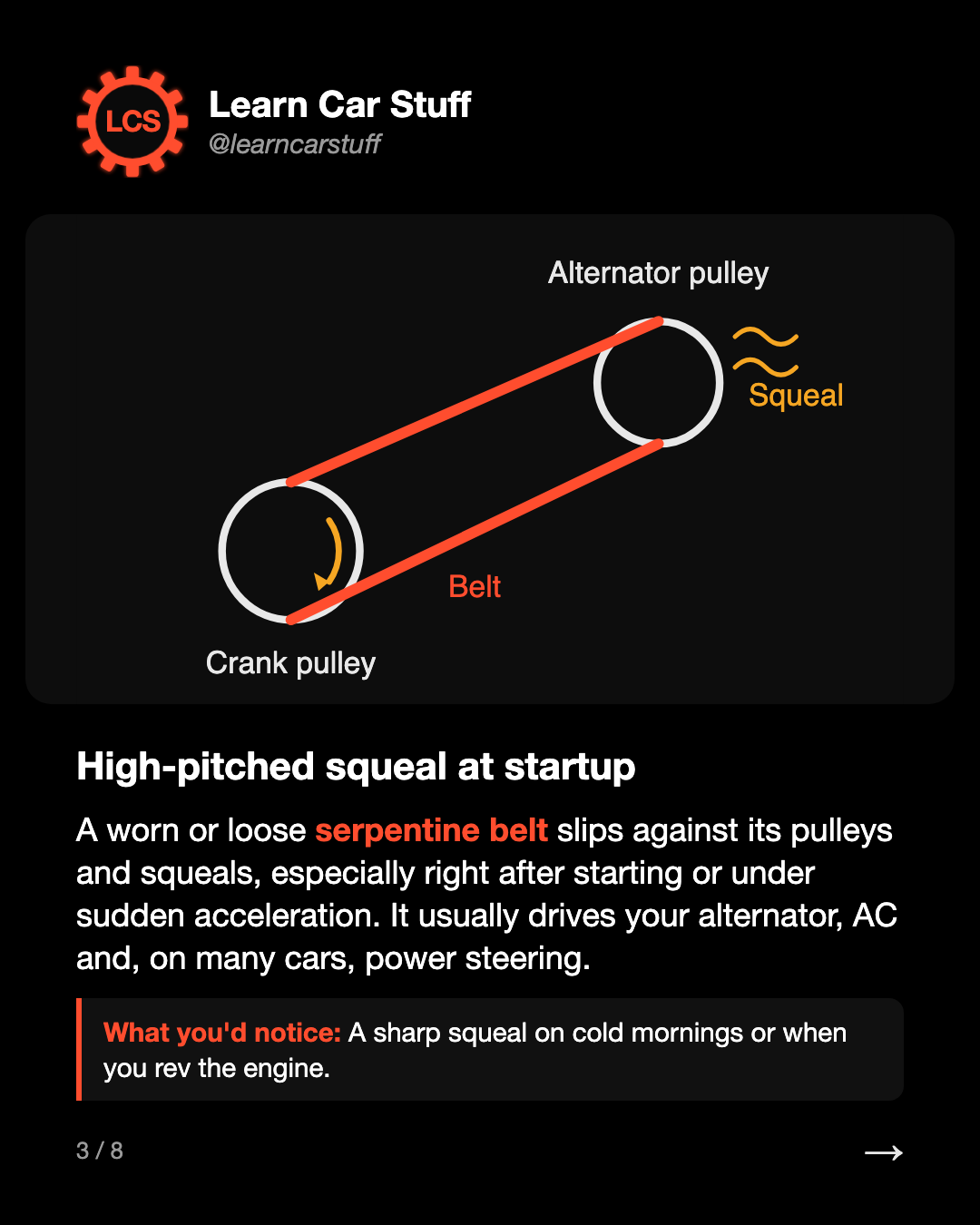
High-pitched squeal at startup
A worn or loose serpentine belt slips against its pulleys and squeals, especially right after starting or under sudden acceleration. It usually drives your alternator, AC and, on many cars, power steering.
What you'd notice: A sharp squeal on cold mornings or when you rev the engine.
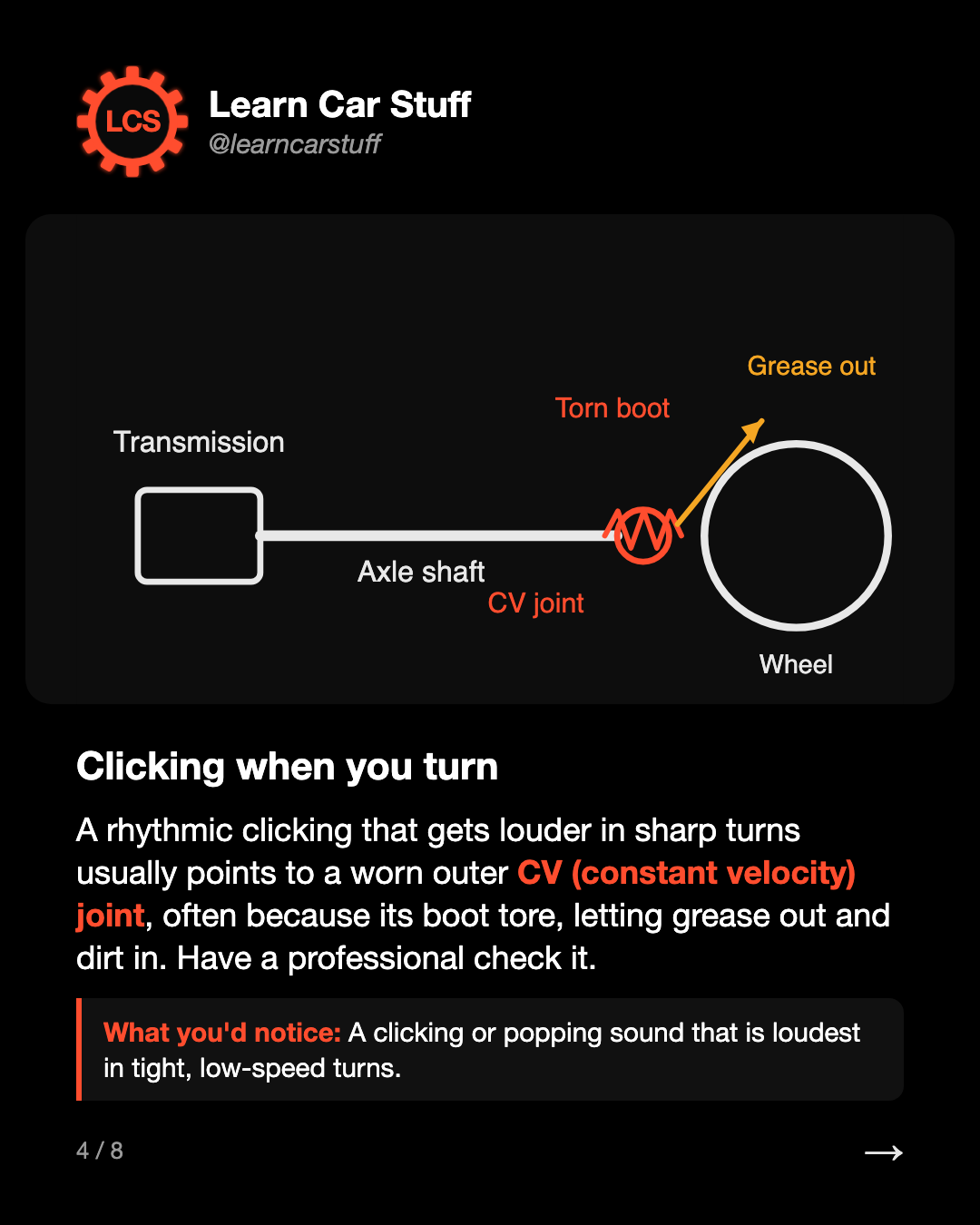
Clicking when you turn
A rhythmic clicking that gets louder in sharp turns usually points to a worn outer CV (constant velocity) joint, often because its boot tore, letting grease out and dirt in. Have a professional check it.
What you'd notice: A clicking or popping sound that is loudest in tight, low-speed turns.
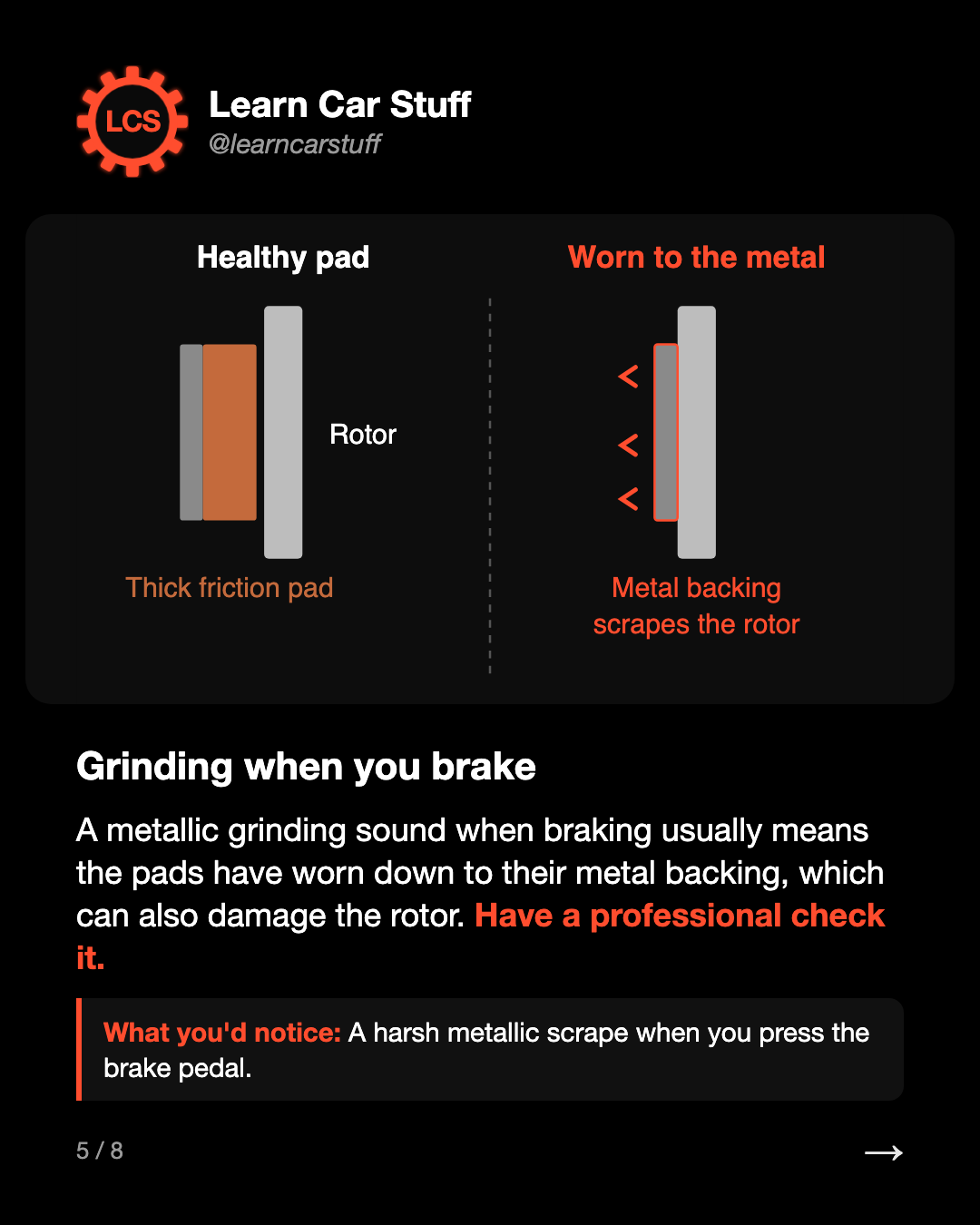
Grinding when you brake
A metallic grinding sound when braking usually means the pads have worn down to their metal backing, which can also damage the rotor. Have a professional check it.
What you'd notice: A harsh metallic scrape when you press the brake pedal.
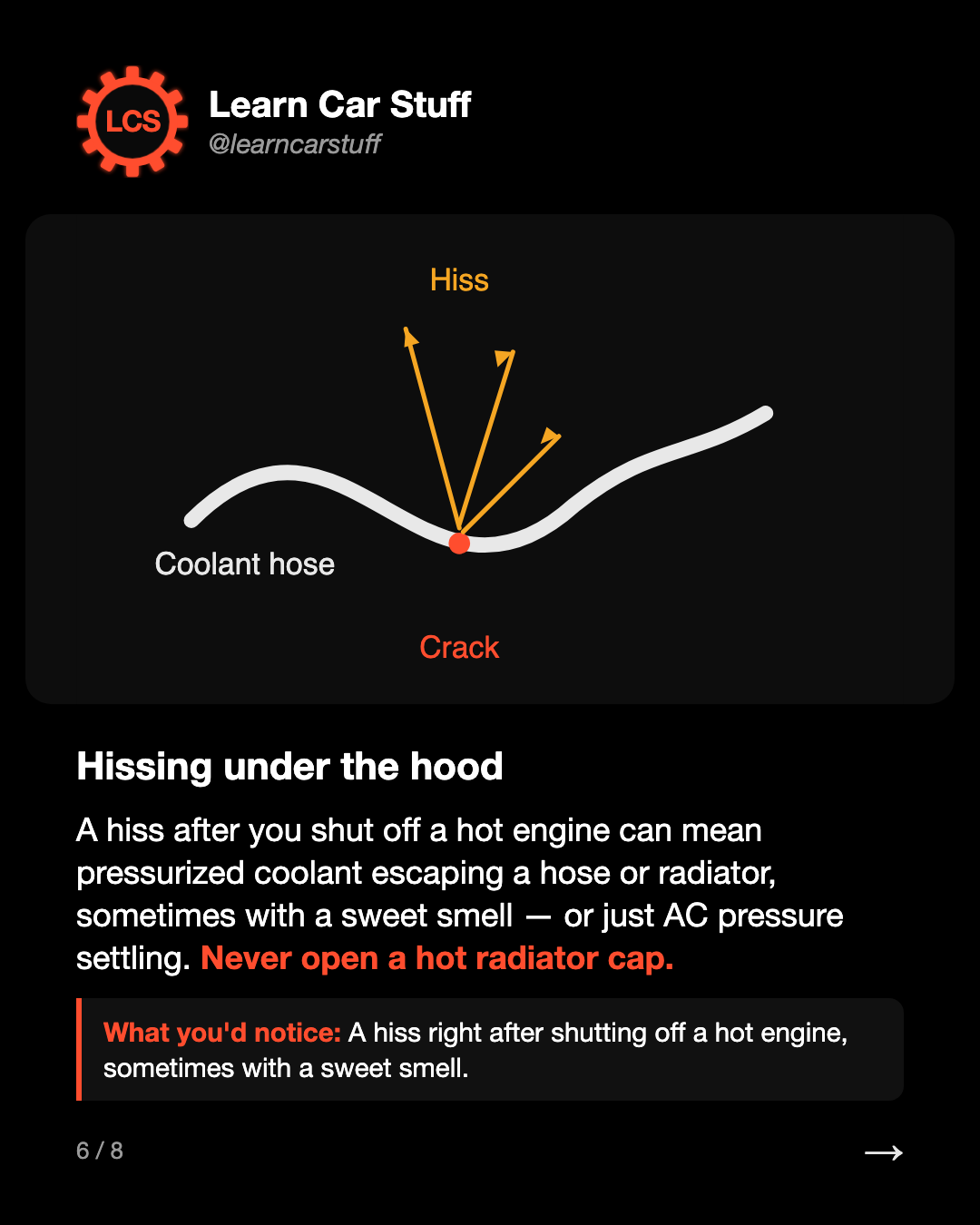
Hissing under the hood
A hiss after you shut off a hot engine can mean pressurized coolant escaping a hose or radiator, sometimes with a sweet smell — or just AC pressure settling. Never open a hot radiator cap.
What you'd notice: A hiss right after shutting off a hot engine, sometimes with a sweet smell.
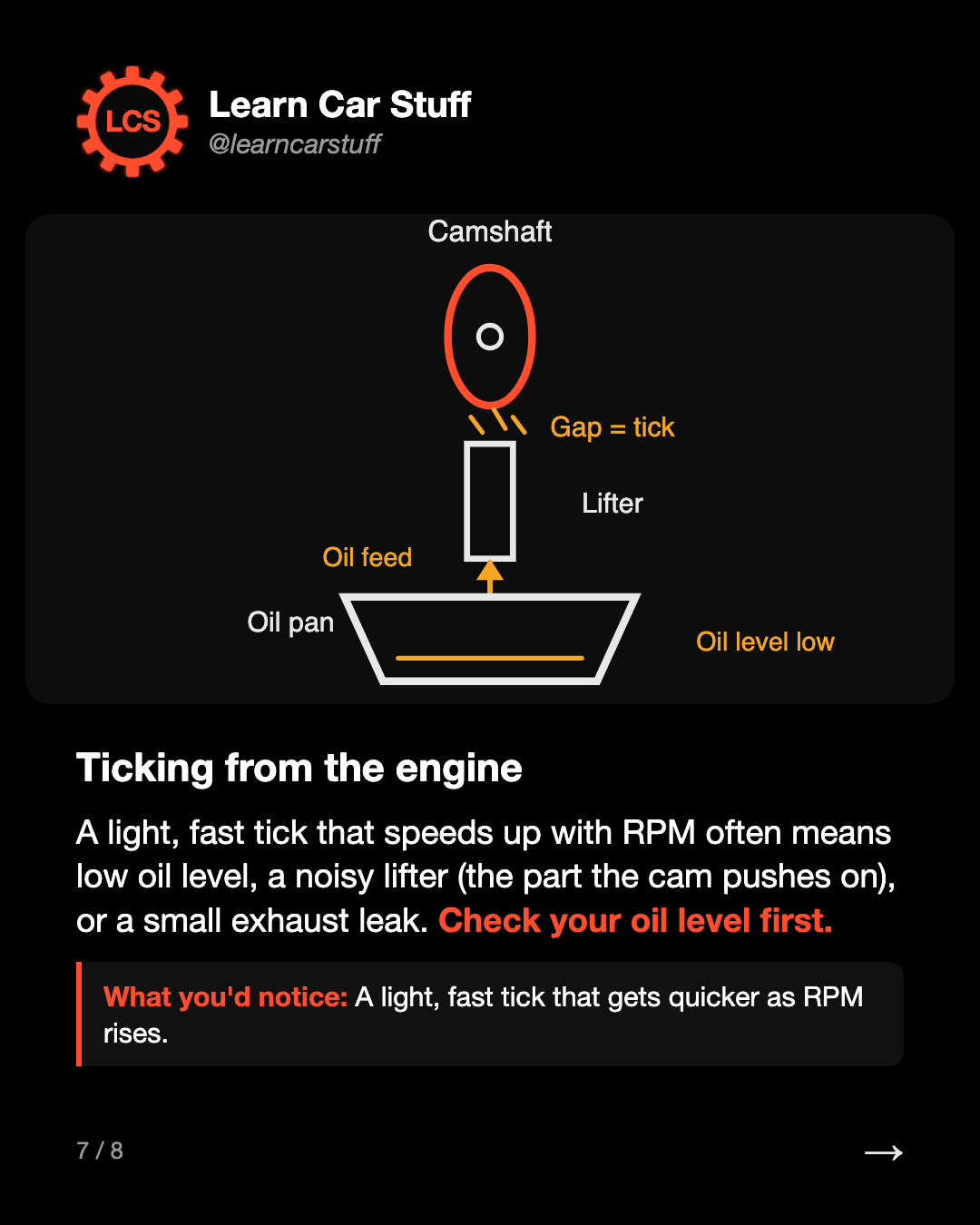
Ticking from the engine
A light, fast tick that speeds up with RPM often means low oil level, a noisy lifter (the part the cam pushes on), or a small exhaust leak. Check your oil level first.
What you'd notice: A light, fast tick that gets quicker as RPM rises.
Save this
- Squeal at startup: check the serpentine belt
- Clicking in turns: likely a CV joint
- Grinding when braking: have it inspected
- Hiss after shutoff: could be a coolant leak
- Fast ticking: check your oil level first