 Learn Car Stuff
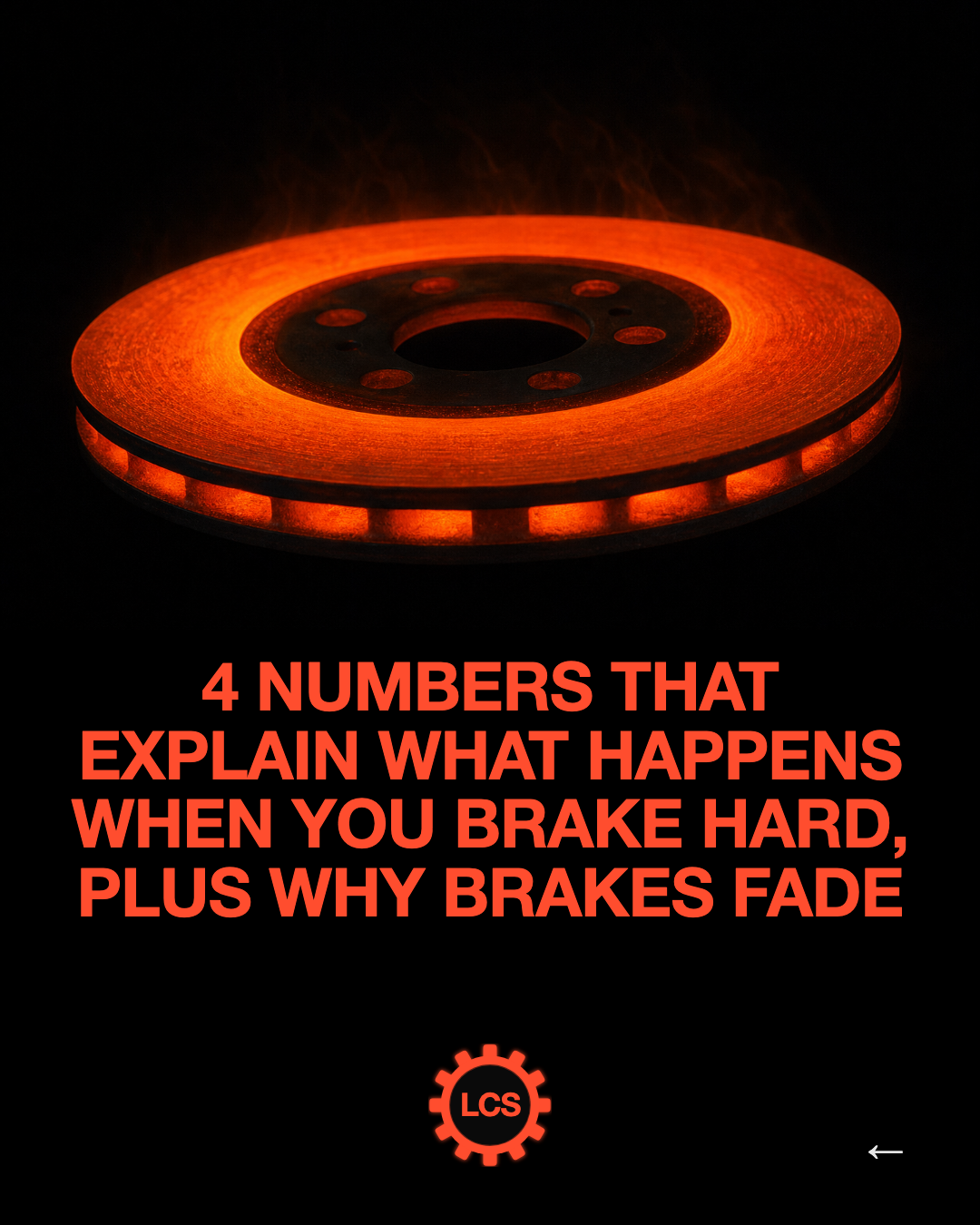
4 numbers that explain what happens when you brake hard, plus why brakes fade
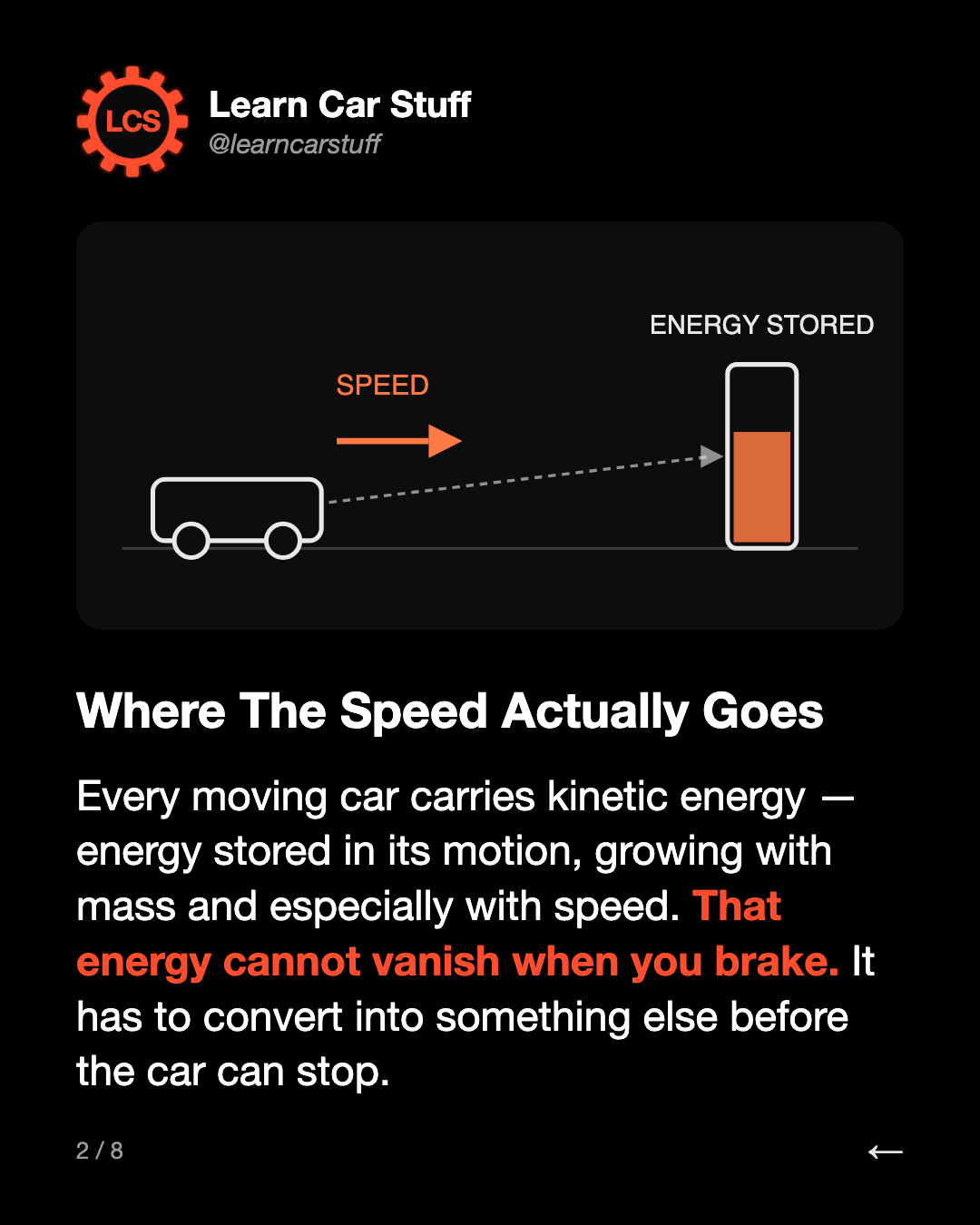
Where The Speed Actually Goes
Every moving car carries kinetic energy — energy stored in its motion, growing with mass and especially with speed. That energy cannot vanish when you brake. It has to convert into something else before the car can stop.
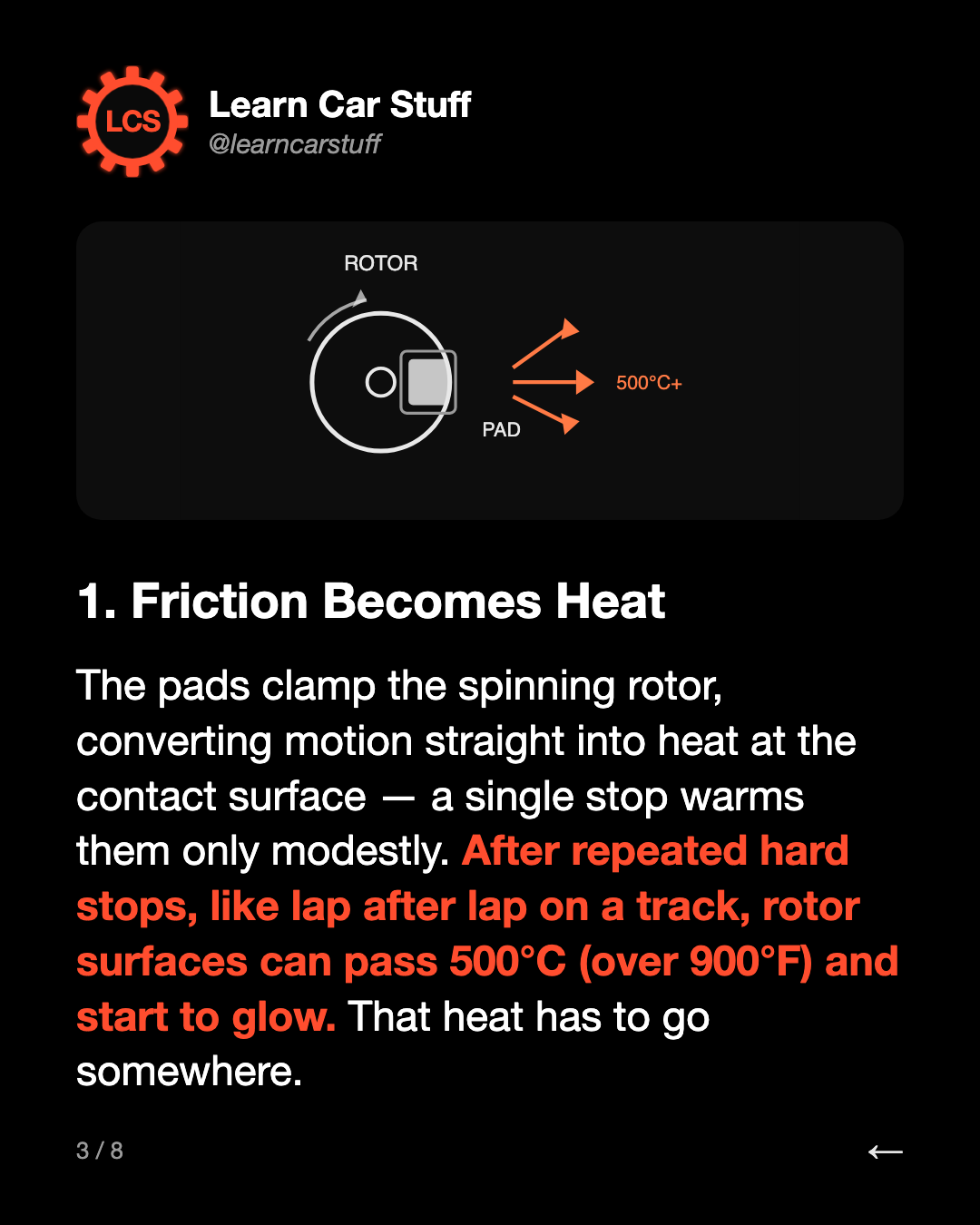
1. Friction Becomes Heat
The pads clamp the spinning rotor, converting motion straight into heat at the contact surface — a single stop warms them only modestly. After repeated hard stops, like lap after lap on a track, rotor surfaces can pass 500°C (over 900°F) and start to glow. That heat has to go somewhere.
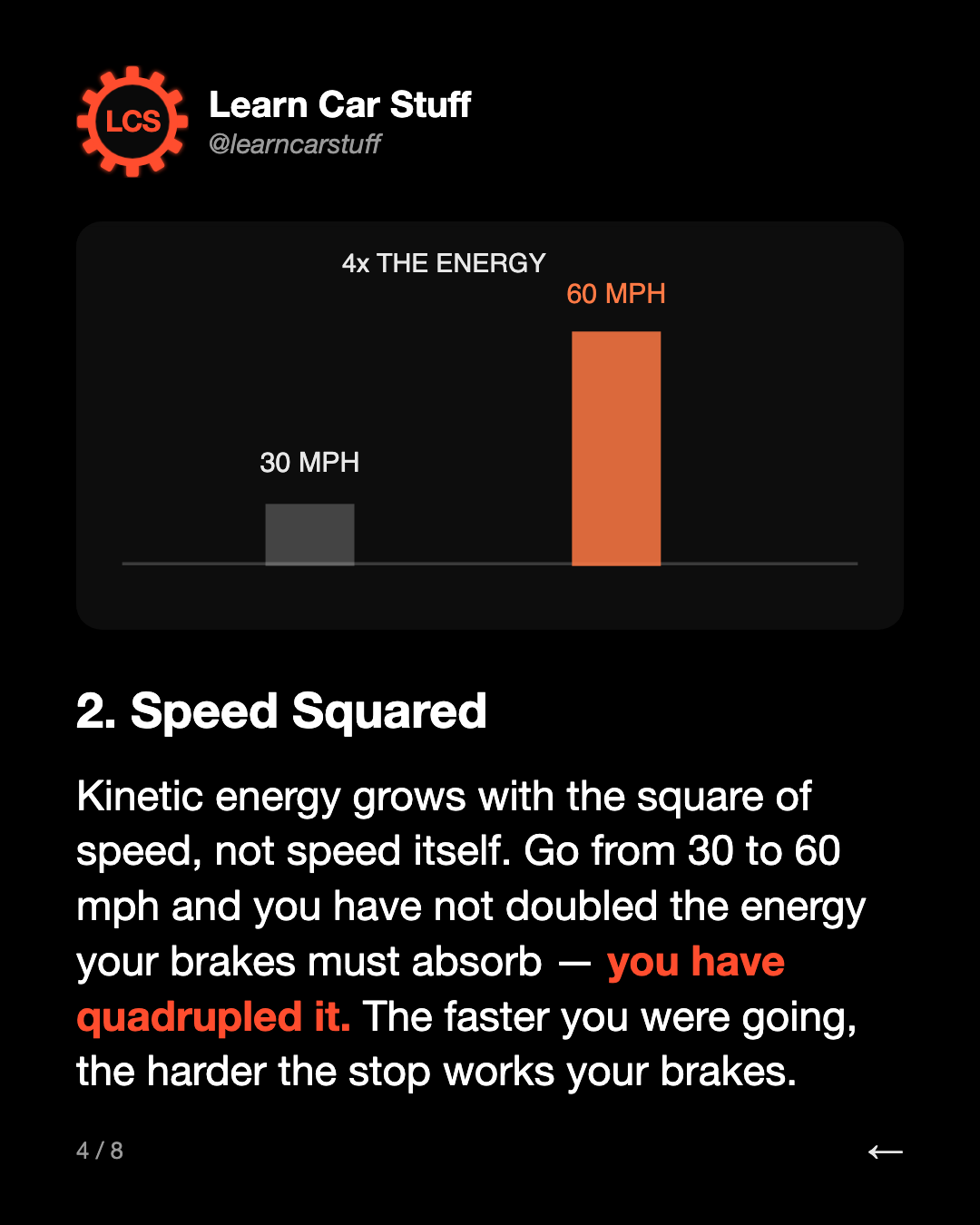
2. Speed Squared
Kinetic energy grows with the square of speed, not speed itself. Go from 30 to 60 mph and you have not doubled the energy your brakes must absorb — you have quadrupled it. The faster you were going, the harder the stop works your brakes.
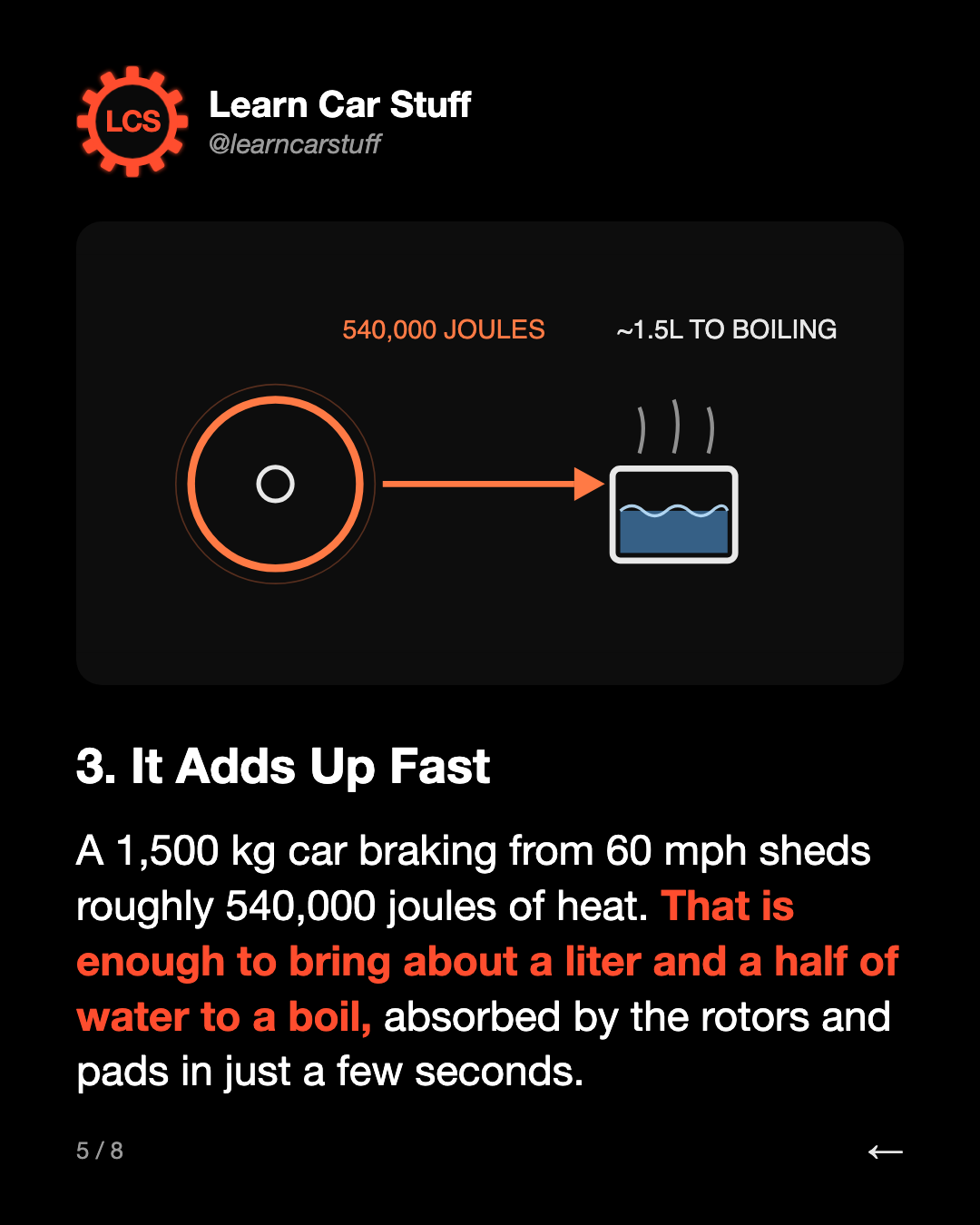
3. It Adds Up Fast
A 1,500 kg car braking from 60 mph sheds roughly 540,000 joules of heat. That is enough to bring about a liter and a half of water to a boil, absorbed by the rotors and pads in just a few seconds.
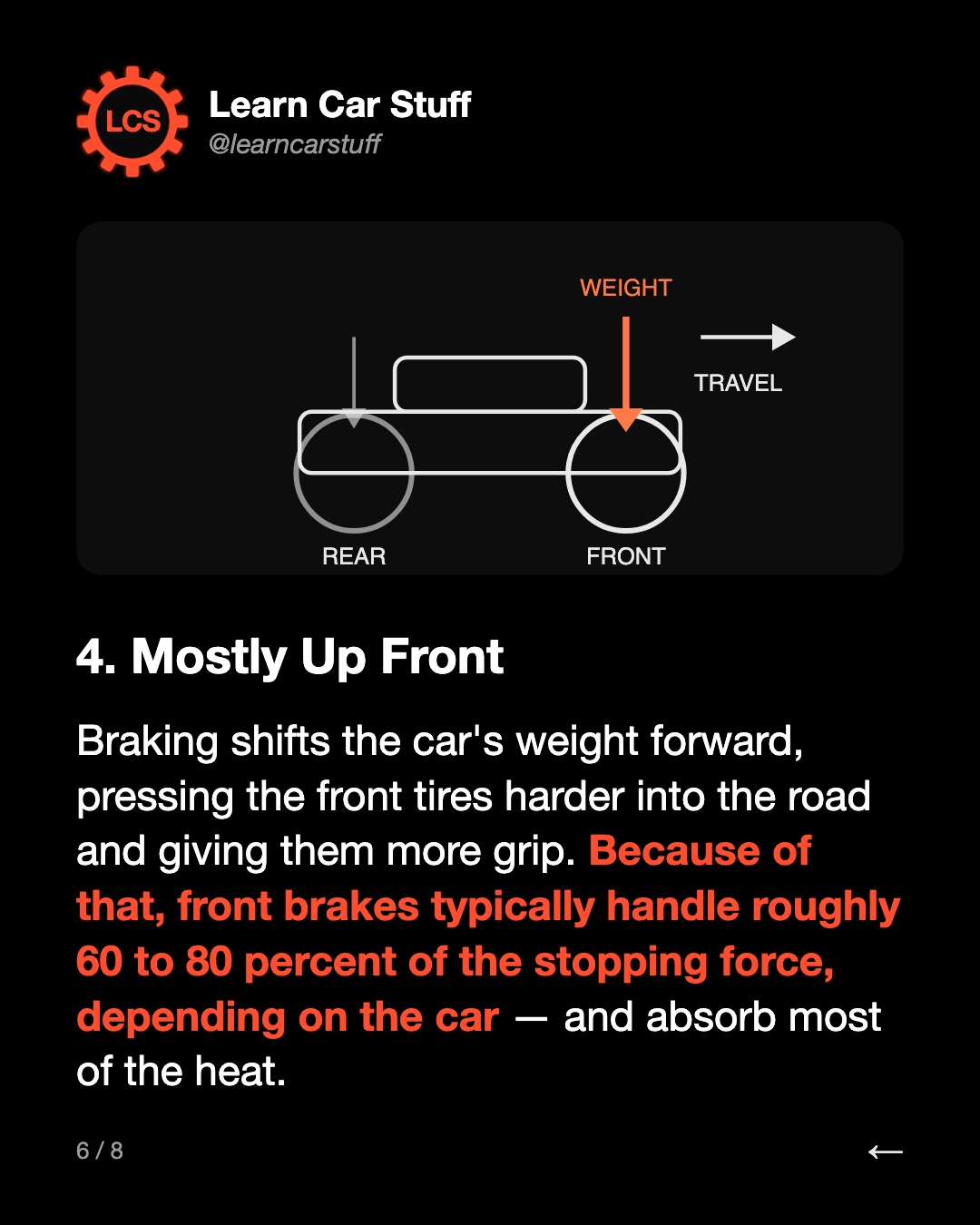
4. Mostly Up Front
Braking shifts the car's weight forward, pressing the front tires harder into the road and giving them more grip. Because of that, front brakes typically handle roughly 60 to 80 percent of the stopping force, depending on the car — and absorb most of the heat.
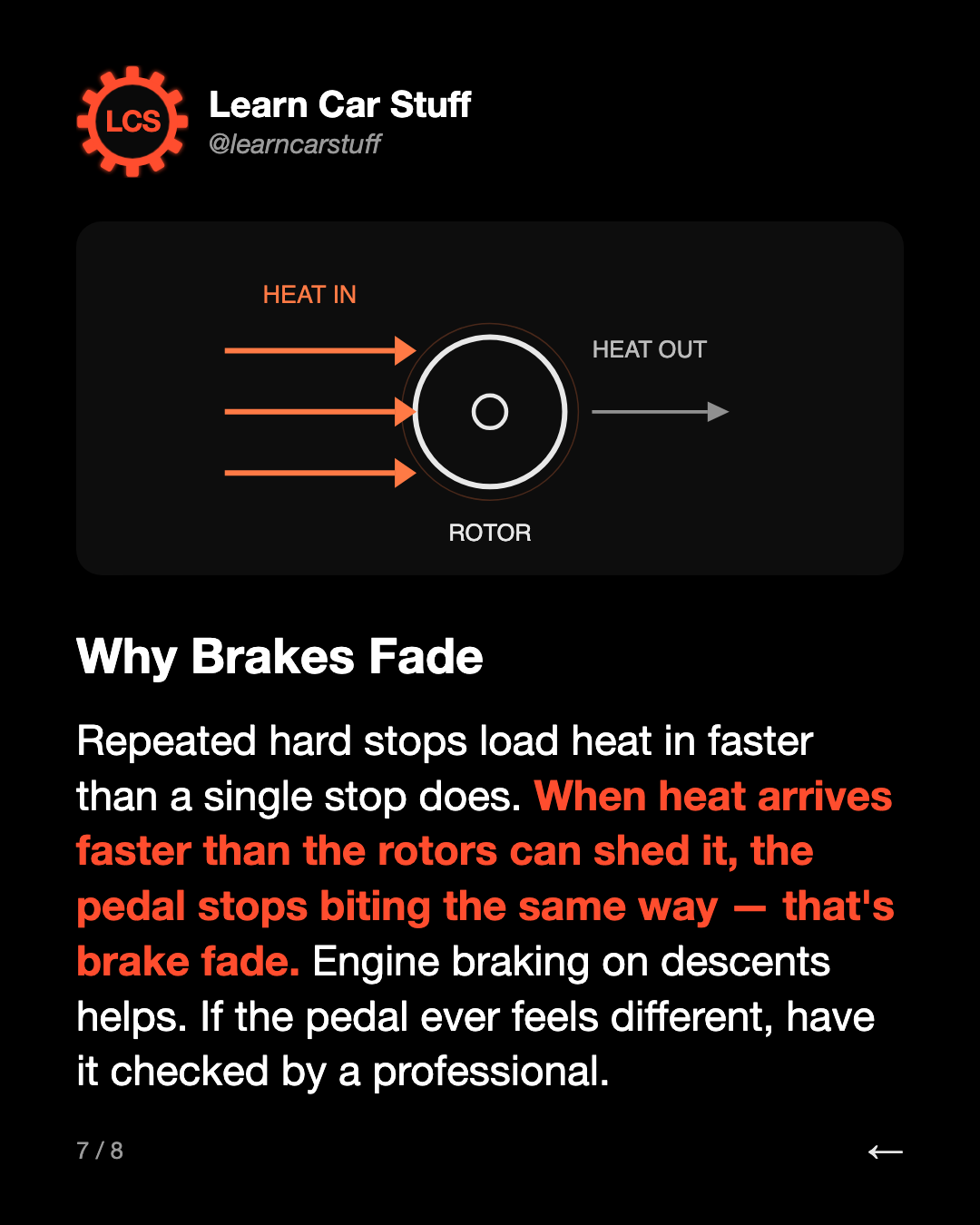
Why Brakes Fade
Repeated hard stops load heat in faster than a single stop does. When heat arrives faster than the rotors can shed it, the pedal stops biting the same way — that's brake fade. Engine braking on descents helps. If the pedal ever feels different, have it checked by a professional.