
Learn Car Stuff
← All posts

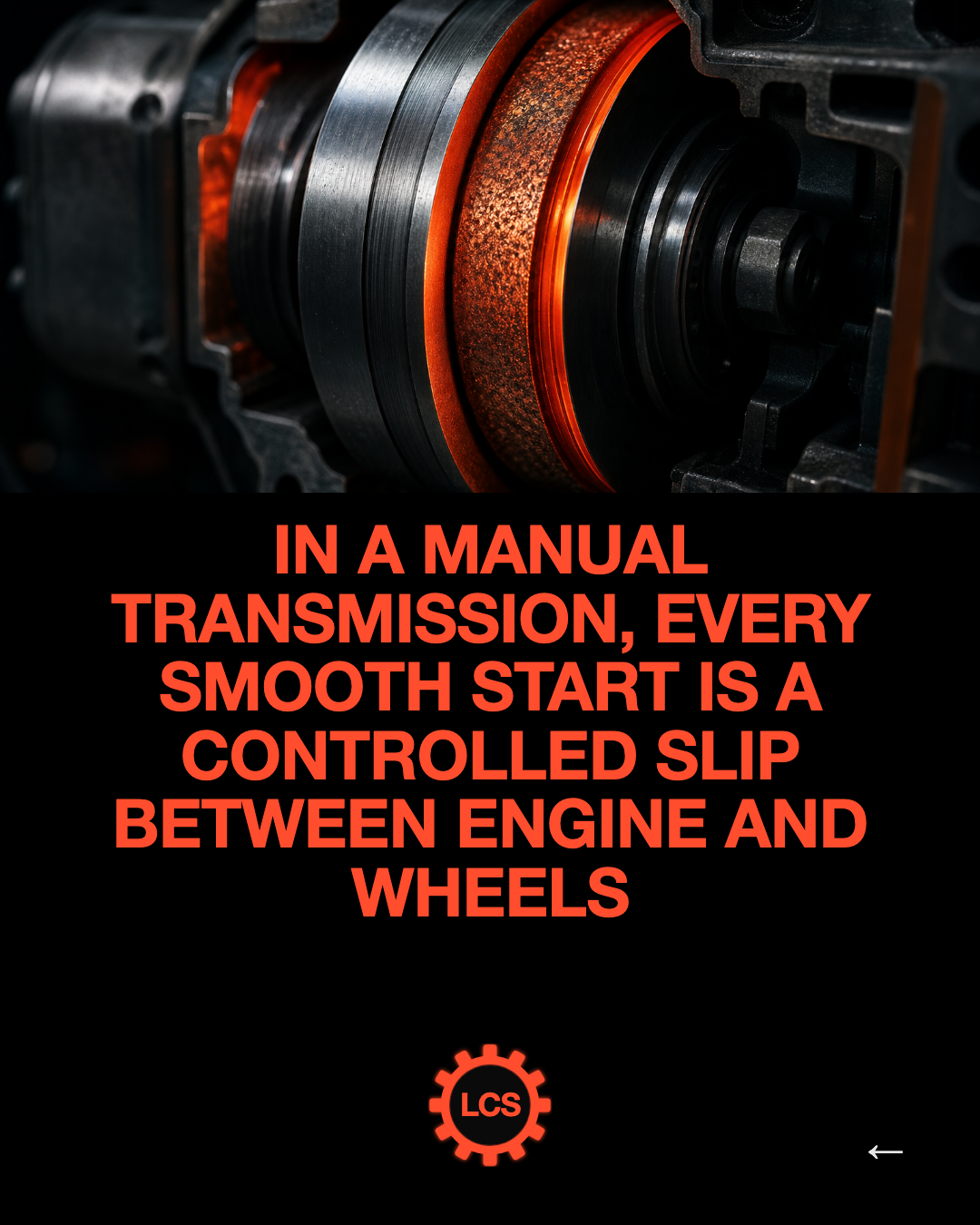
In a manual transmission, every smooth start is a controlled slip between engine and wheels
· View on Instagram · View on Facebook

In a manual transmission, every smooth start is a controlled slip between engine and wheels
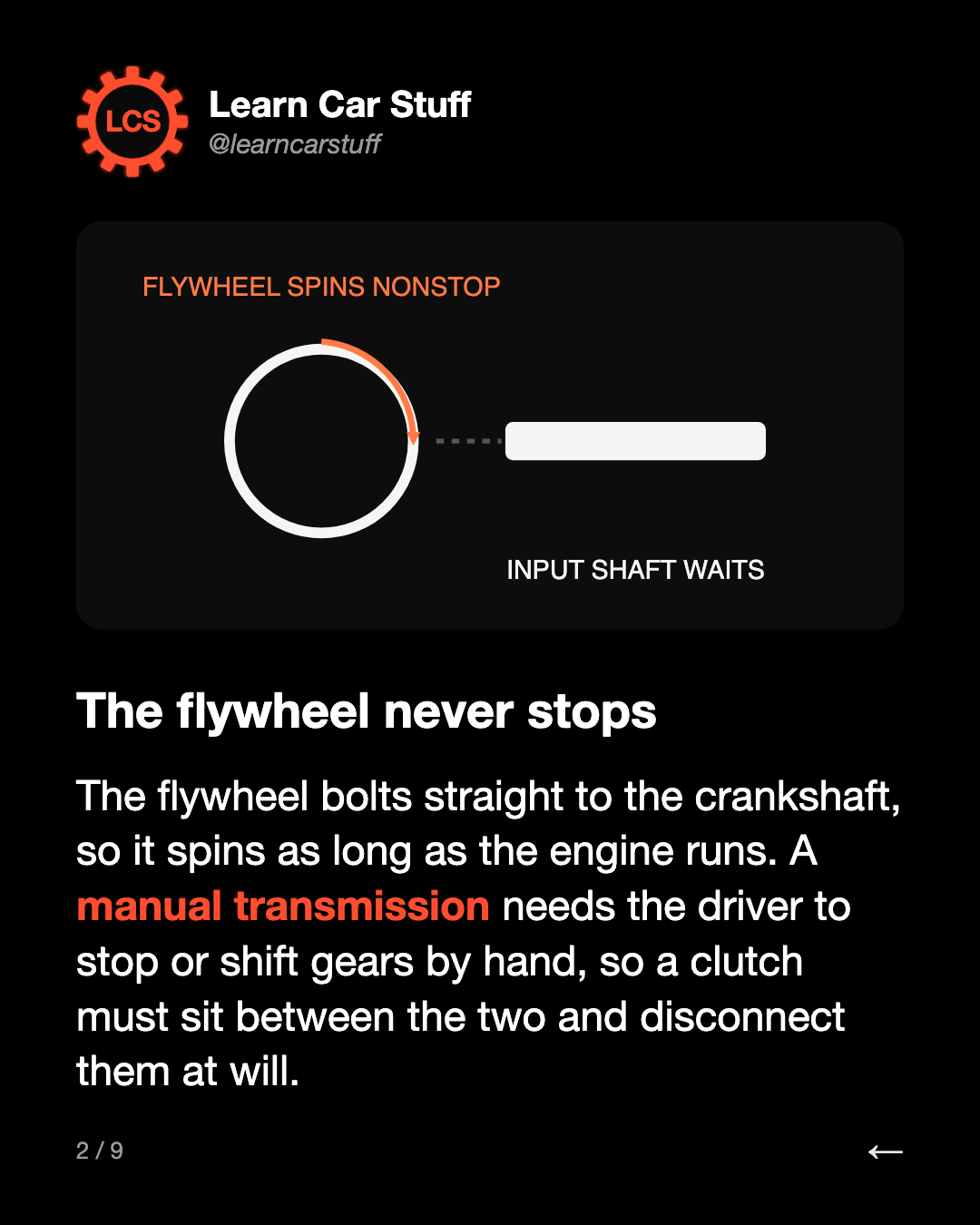
The flywheel never stops. The flywheel bolts straight to the crankshaft, so it spins as long as the engine runs. A manual transmission needs the driver to stop or shift gears by hand, so a clutch must sit between the two and disconnect them at will.
The flywheel never stops

The flywheel bolts straight to the crankshaft, so it spins as long as the engine runs. A manual transmission needs the driver to stop or shift gears by hand, so a clutch must sit between the two and disconnect them at will.

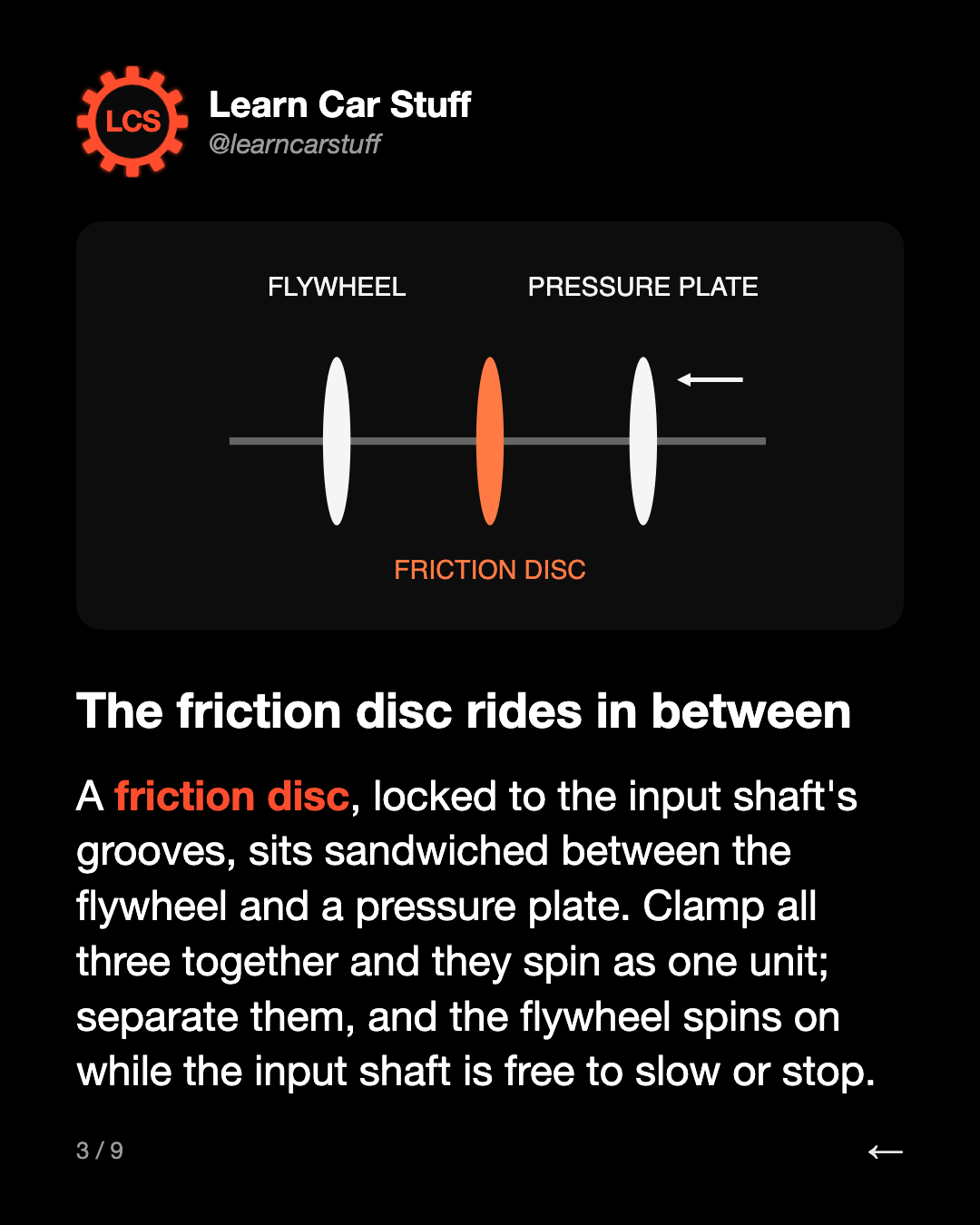
The friction disc rides in between. A friction disc, locked to the input shaft's grooves, sits sandwiched between the flywheel and a pressure plate. Clamp all three together and they spin as one unit; separate them, and the flywheel spins on while the input shaft is free to slow or stop.
The friction disc rides in between

A friction disc, locked to the input shaft's grooves, sits sandwiched between the flywheel and a pressure plate. Clamp all three together and they spin as one unit; separate them, and the flywheel spins on while the input shaft is free to slow or stop.

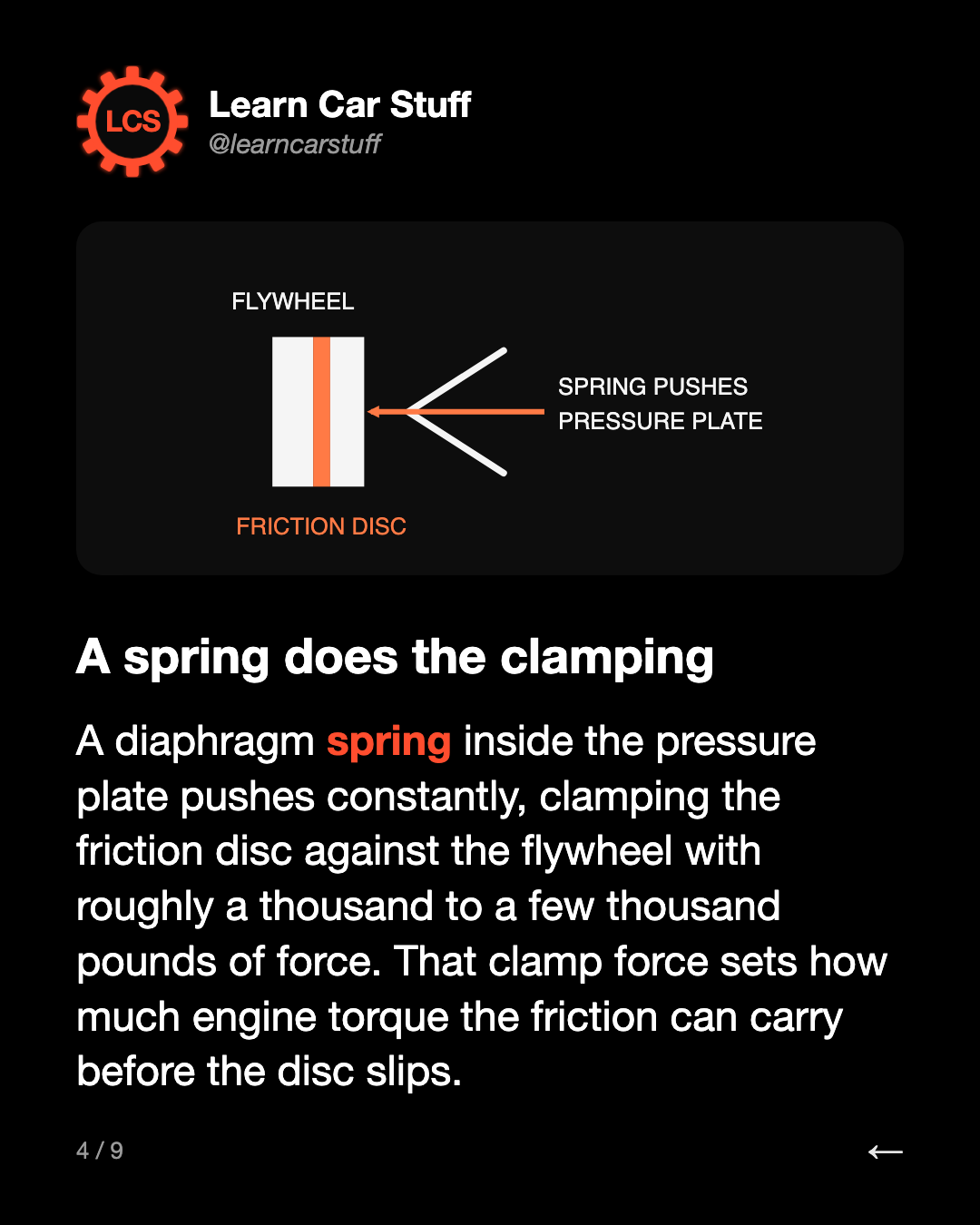
A spring does the clamping. A diaphragm spring inside the pressure plate pushes constantly, clamping the friction disc against the flywheel with roughly a thousand to a few thousand pounds of force. That clamp force sets how much engine torque the friction can carry before the disc slips.
A spring does the clamping

A diaphragm spring inside the pressure plate pushes constantly, clamping the friction disc against the flywheel with roughly a thousand to a few thousand pounds of force. That clamp force sets how much engine torque the friction can carry before the disc slips.

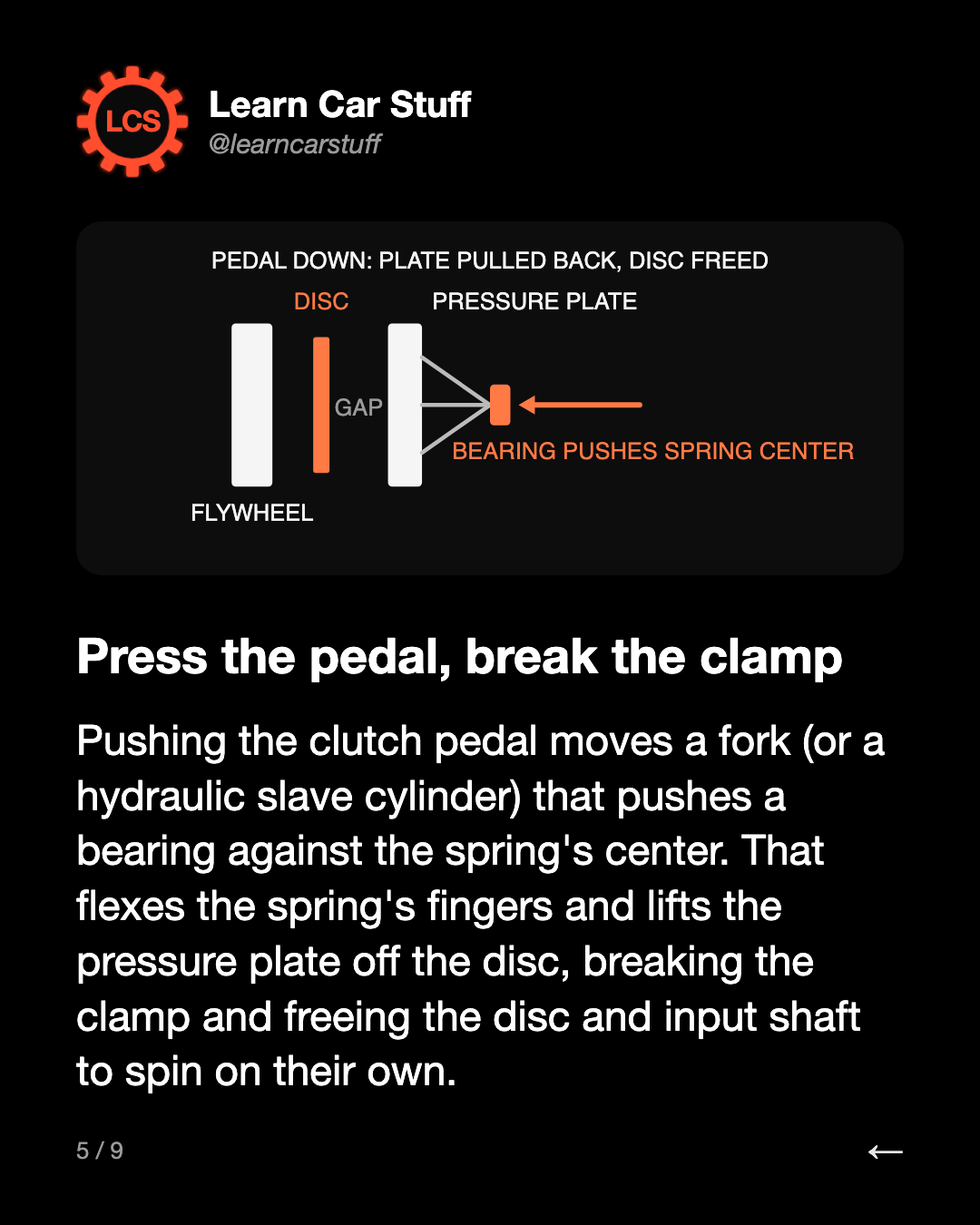
Press the pedal, break the clamp. Pushing the clutch pedal moves a fork (or a hydraulic slave cylinder) that pushes a bearing against the spring's center. That flexes the spring's fingers and lifts the pressure plate off the disc, breaking the clamp and freeing the disc and input shaft to spin on th

Press the pedal, break the clamp

Pushing the clutch pedal moves a fork (or a hydraulic slave cylinder) that pushes a bearing against the spring's center. That flexes the spring's fingers and lifts the pressure plate off the disc, breaking the clamp and freeing the disc and input shaft to spin on their own.
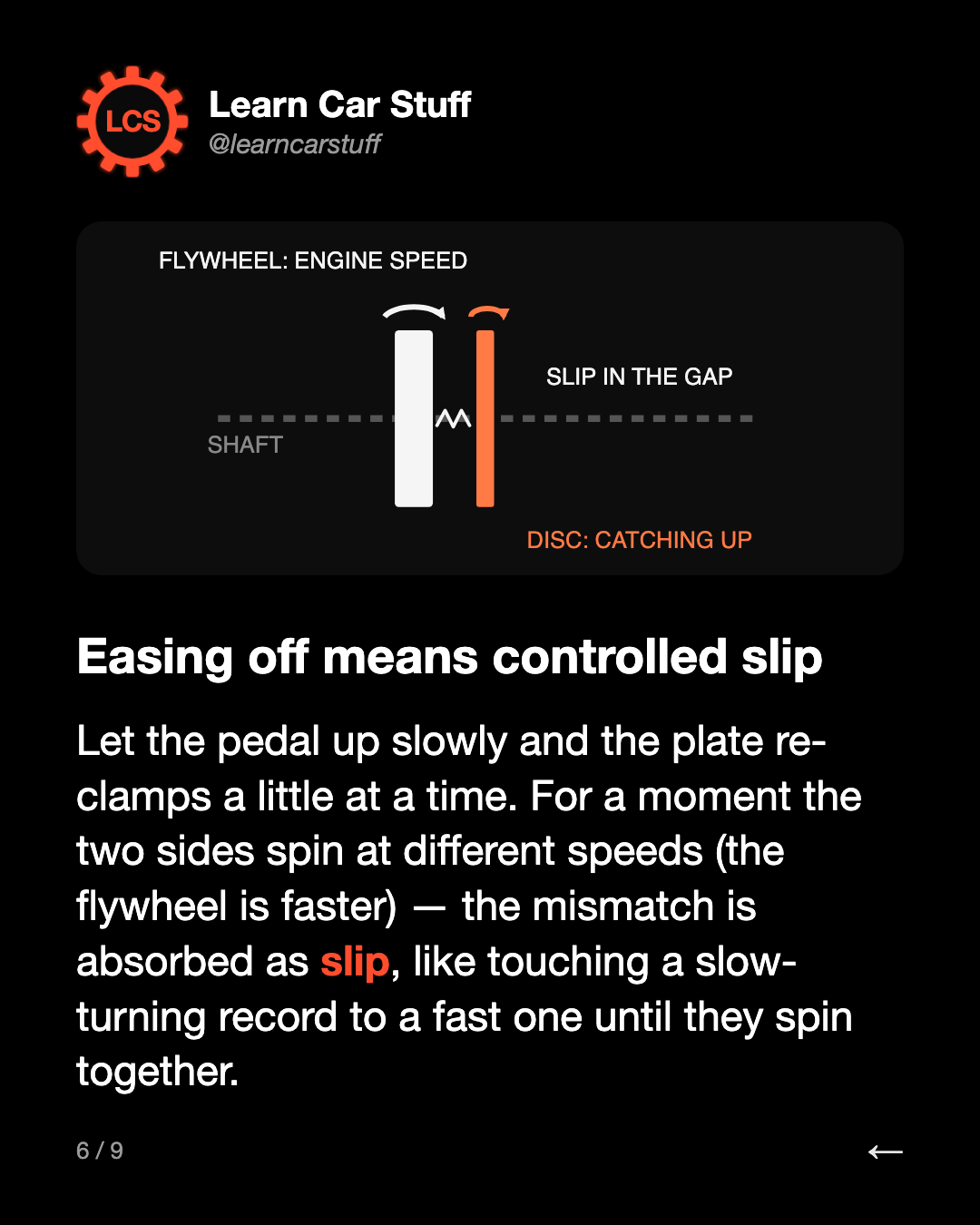
Easing off means controlled slip. Let the pedal up slowly and the plate re-clamps a little at a time. For a moment the two sides spin at different speeds (the flywheel is faster) — the mismatch is absorbed as slip, like touching a slow-turning record to a fast one until they spin together.
Easing off means controlled slip

Let the pedal up slowly and the plate re-clamps a little at a time. For a moment the two sides spin at different speeds (the flywheel is faster) — the mismatch is absorbed as slip, like touching a slow-turning record to a fast one until they spin together.

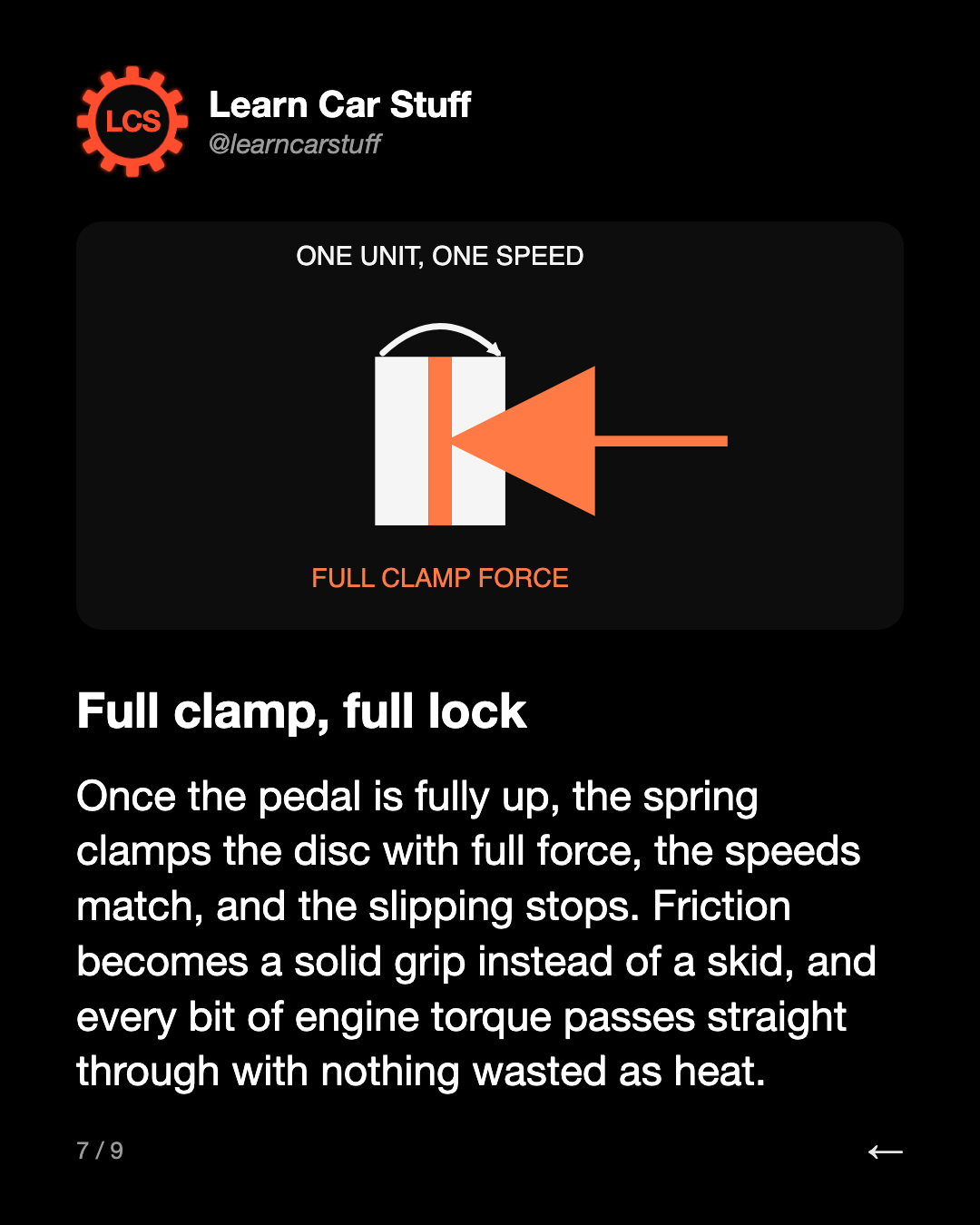
Full clamp, full lock. Once the pedal is fully up, the spring clamps the disc with full force, the speeds match, and the slipping stops. Friction becomes a solid grip instead of a skid, and every bit of engine torque passes straight through with nothing wasted as heat.
Full clamp, full lock

Once the pedal is fully up, the spring clamps the disc with full force, the speeds match, and the slipping stops. Friction becomes a solid grip instead of a skid, and every bit of engine torque passes straight through with nothing wasted as heat.

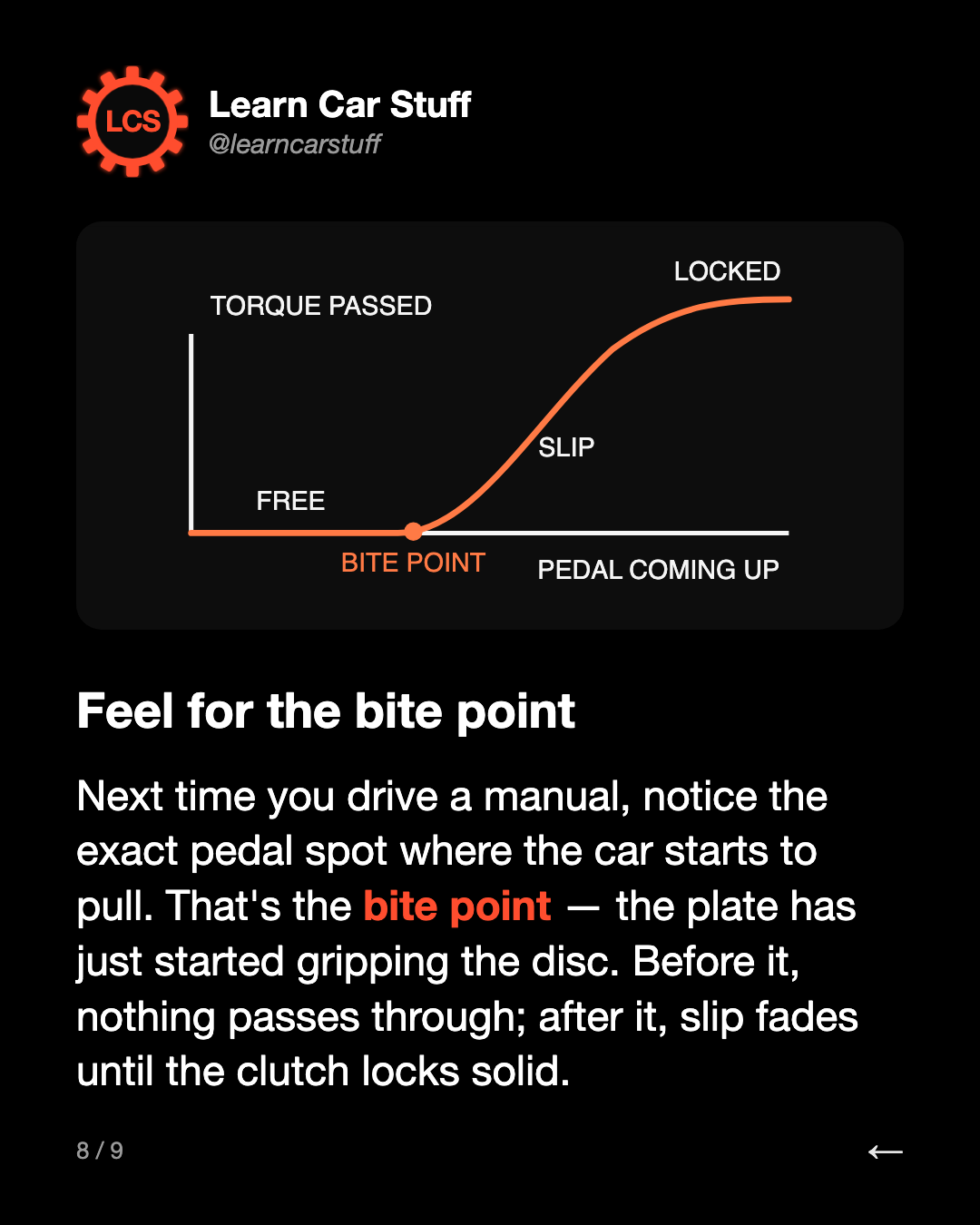
Feel for the bite point. Next time you drive a manual, notice the exact pedal spot where the car starts to pull. That's the bite point — the plate has just started gripping the disc. Before it, nothing passes through; after it, slip fades until the clutch locks solid.
Feel for the bite point

Next time you drive a manual, notice the exact pedal spot where the car starts to pull. That's the bite point — the plate has just started gripping the disc. Before it, nothing passes through; after it, slip fades until the clutch locks solid.
Follow @learncarstuffSave this post on Instagram

More posts