 Learn Car Stuff
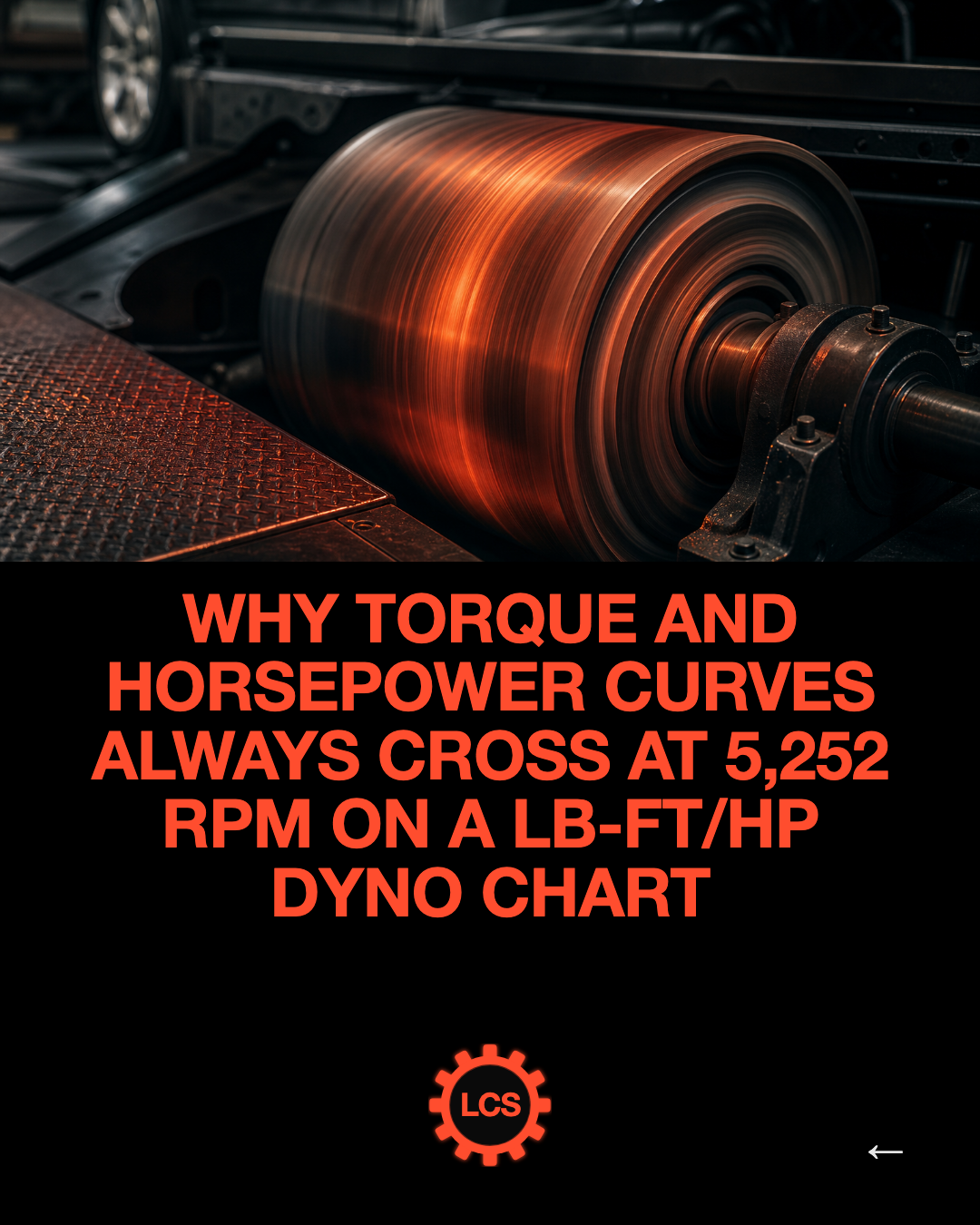
Why torque and horsepower curves always cross at 5,252 rpm on a lb-ft/hp dyno chart
What Torque Actually Measures
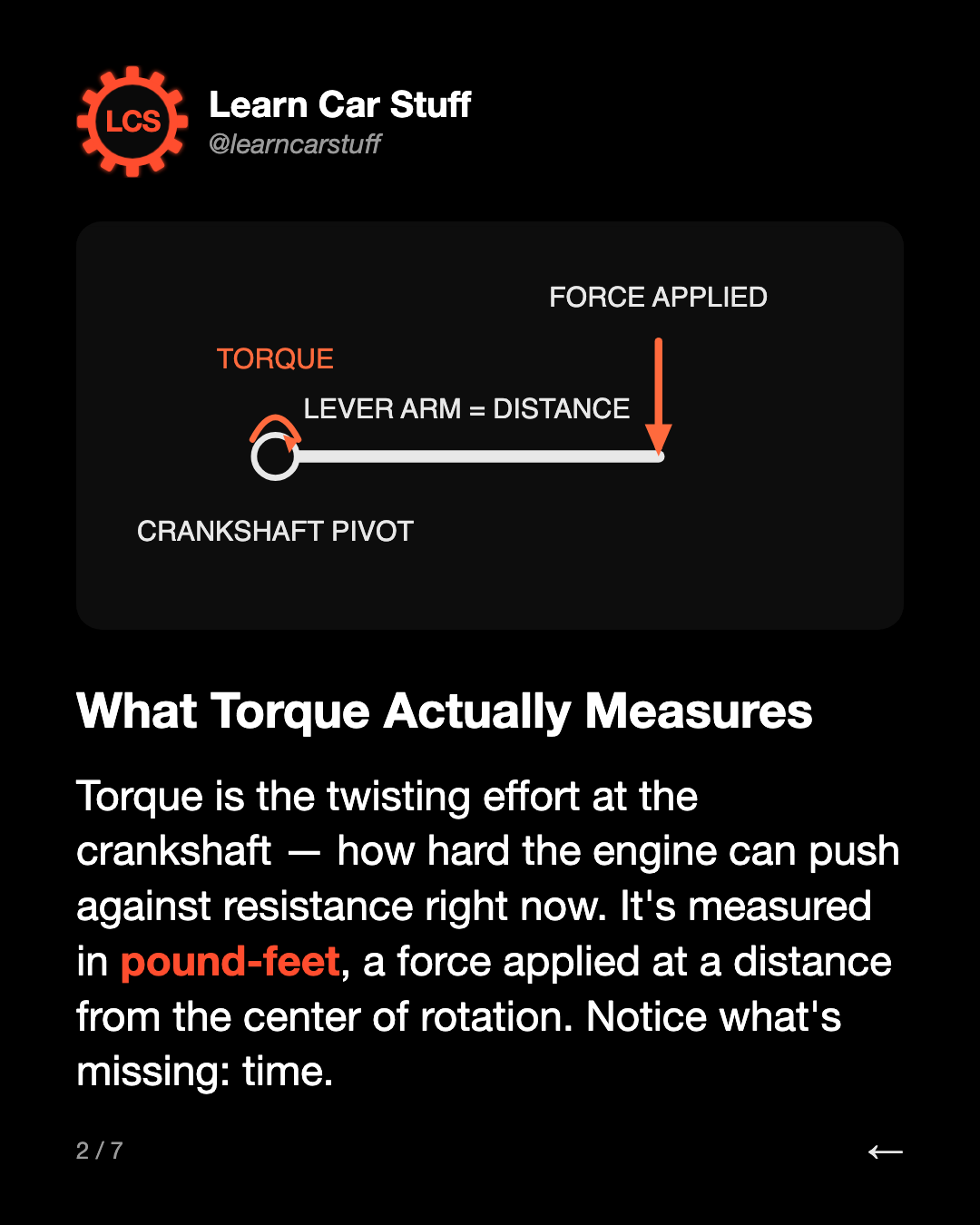
Torque is the twisting effort at the crankshaft — how hard the engine can push against resistance right now. It's measured in pound-feet, a force applied at a distance from the center of rotation. Notice what's missing: time.
What Horsepower Actually Measures
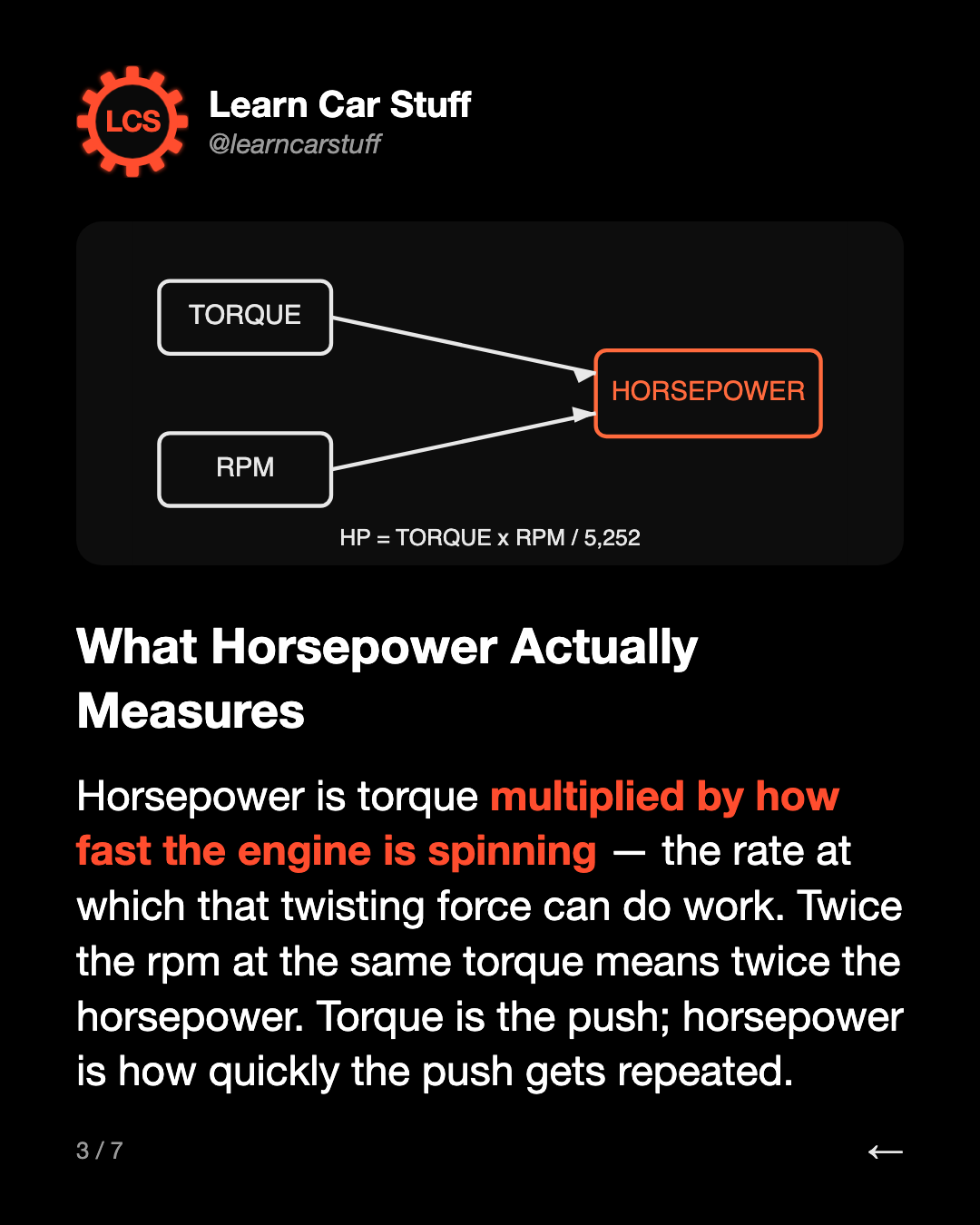
Horsepower is torque multiplied by how fast the engine is spinning — the rate at which that twisting force can do work. Twice the rpm at the same torque means twice the horsepower. Torque is the push; horsepower is how quickly the push gets repeated.
Where The Number 5,252 Comes From
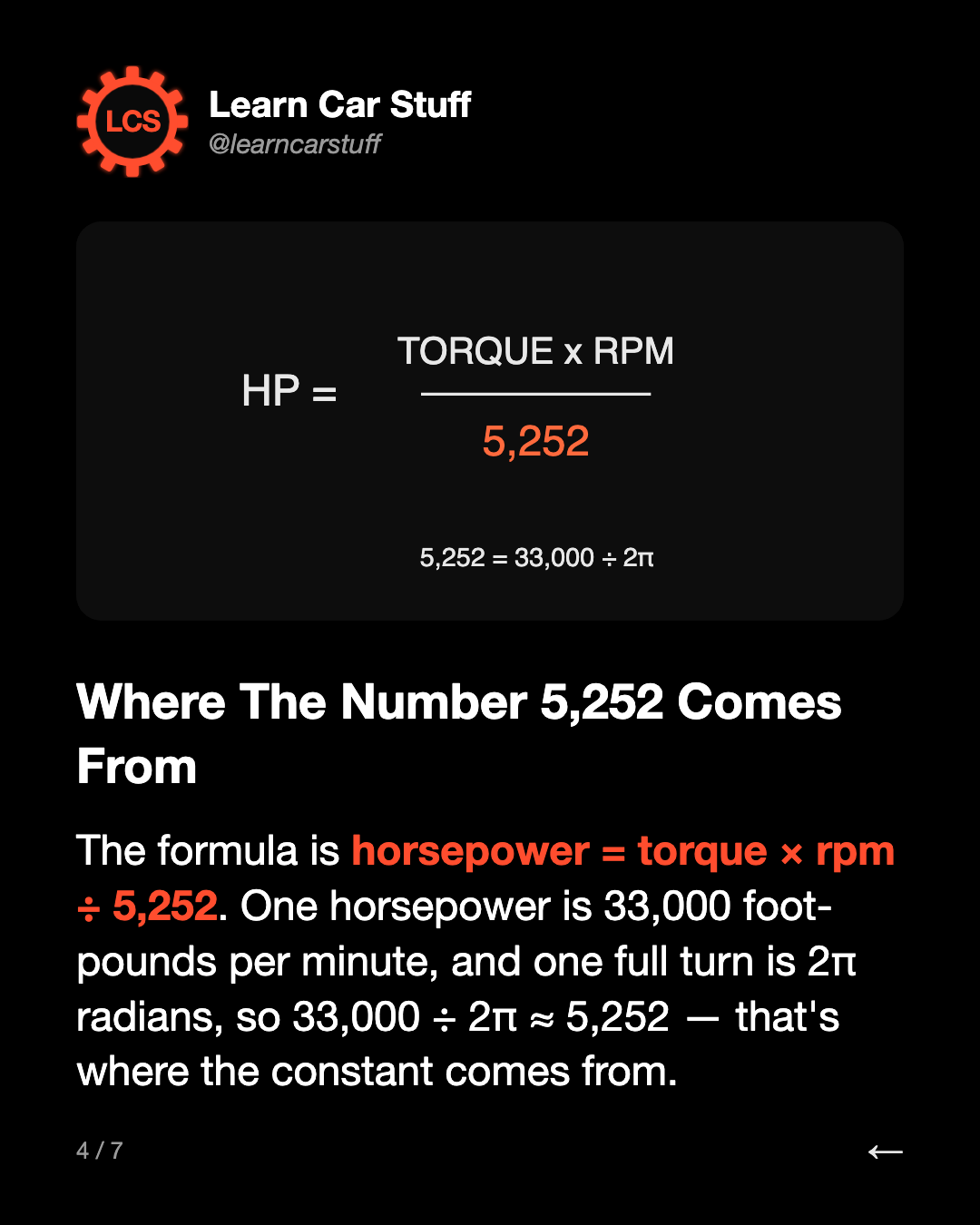
The formula is horsepower = torque × rpm ÷ 5,252. One horsepower is 33,000 foot-pounds per minute, and one full turn is 2π radians, so 33,000 ÷ 2π ≈ 5,252 — that's where the constant comes from.
Why The Lines Always Cross There
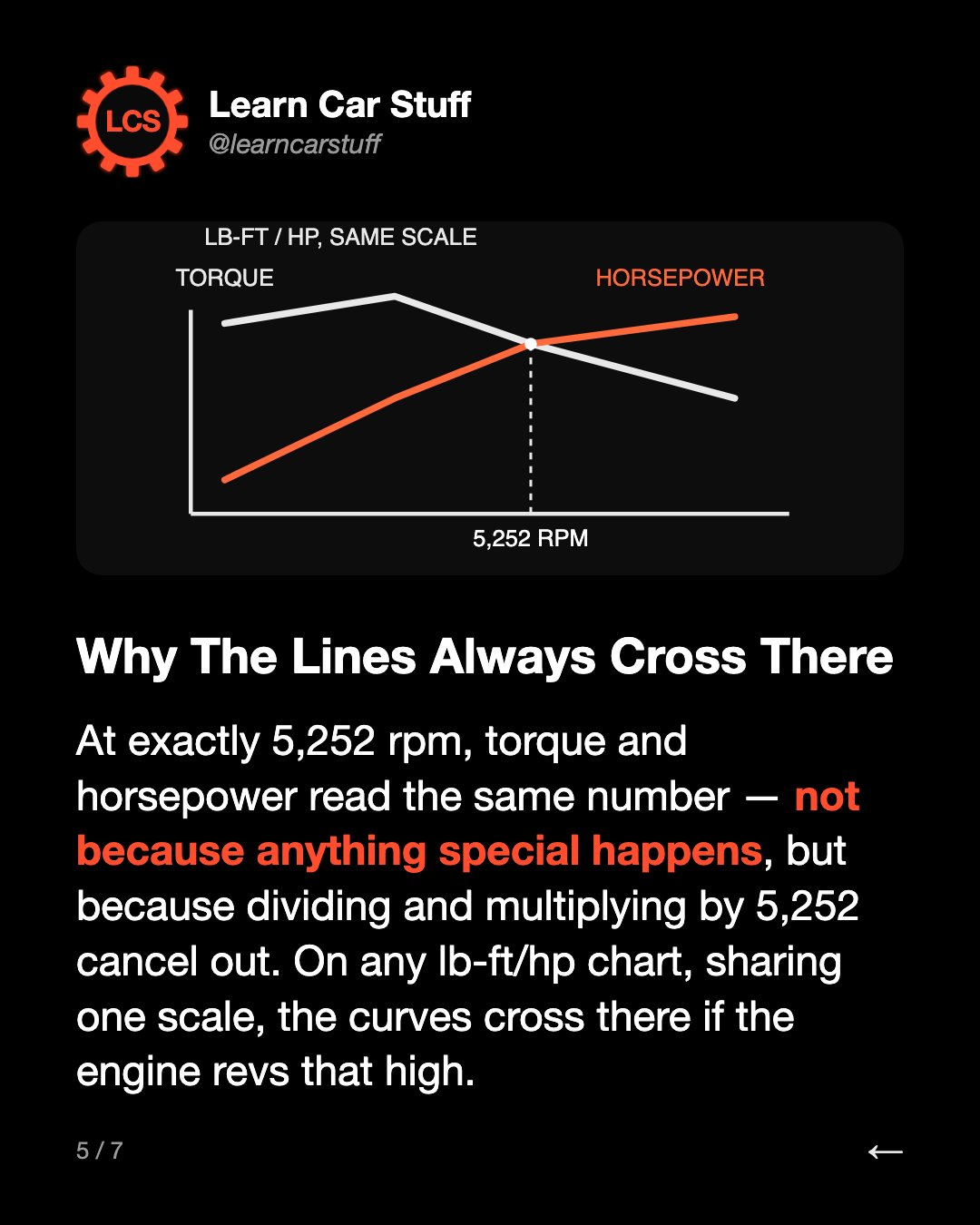
At exactly 5,252 rpm, torque and horsepower read the same number — not because anything special happens, but because dividing and multiplying by 5,252 cancel out. On any lb-ft/hp chart, sharing one scale, the curves cross there if the engine revs that high.
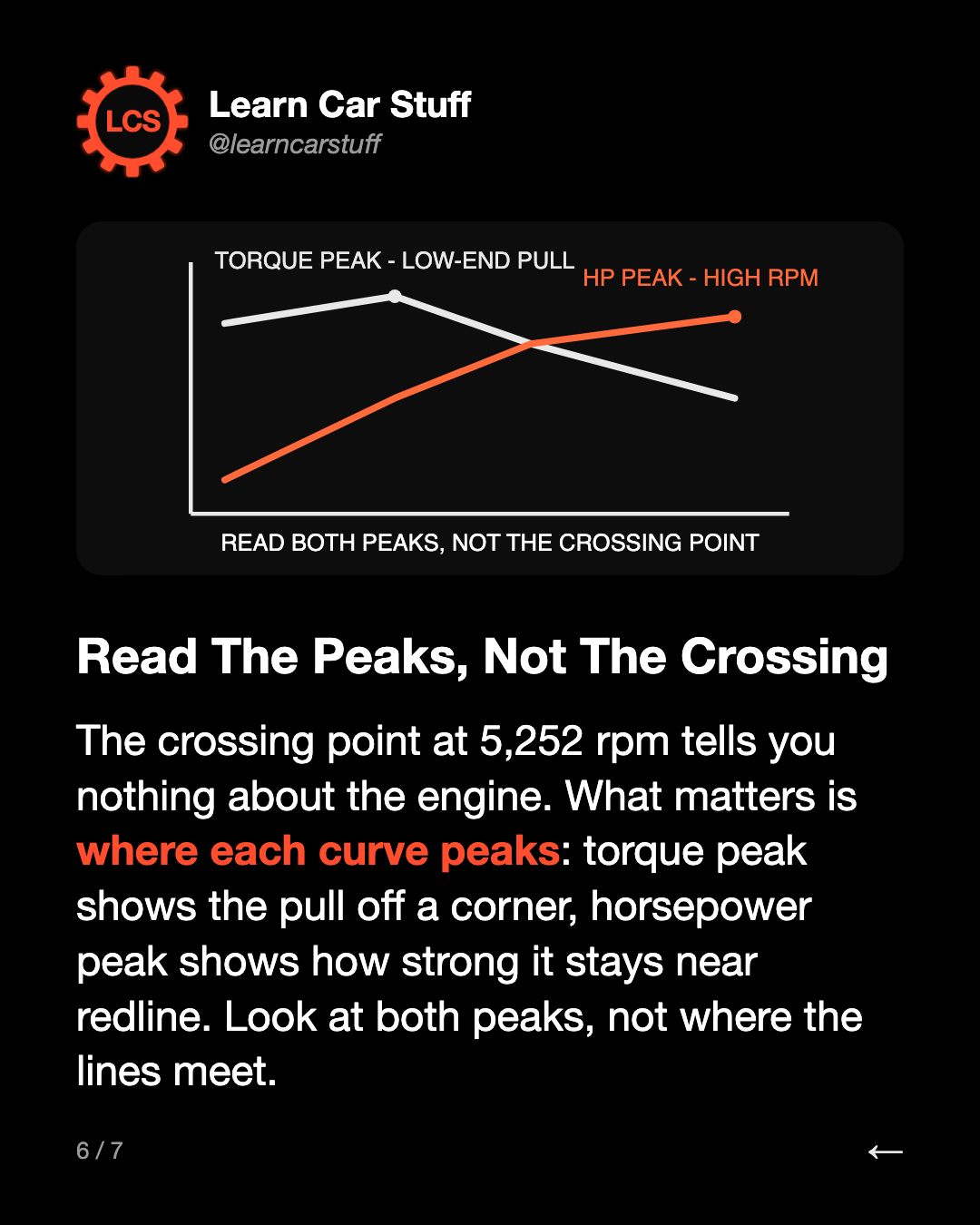
Read The Peaks, Not The Crossing
The crossing point at 5,252 rpm tells you nothing about the engine. What matters is where each curve peaks: torque peak shows the pull off a corner, horsepower peak shows how strong it stays near redline. Look at both peaks, not where the lines meet.