
Learn Car Stuff
← All posts

Turbo vs supercharger: what actually spins the compressor
· View on Instagram · View on Facebook

Turbo vs supercharger: what actually spins the compressor
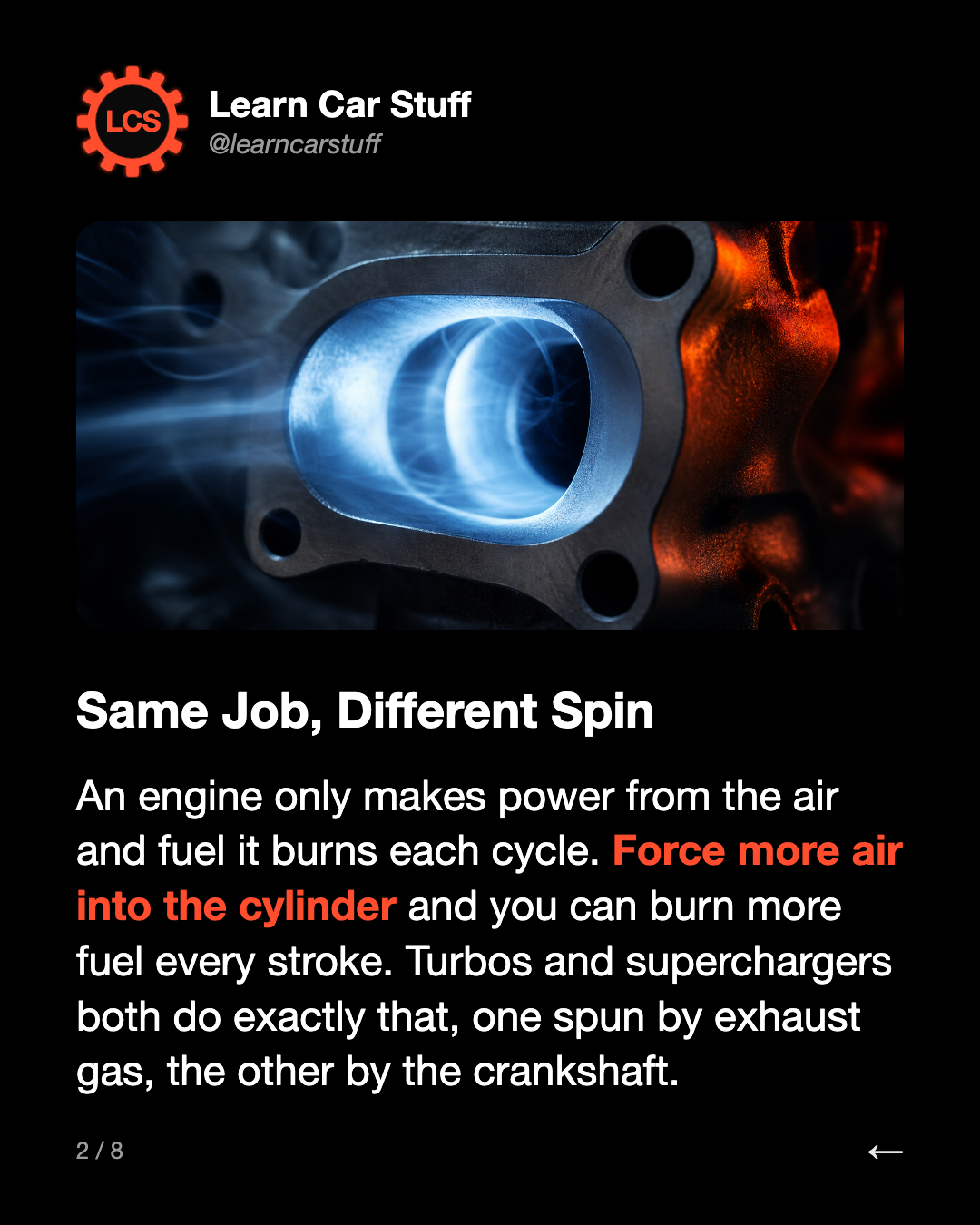
Same Job, Different Spin. An engine only makes power from the air and fuel it burns each cycle. Force more air into the cylinder and you can burn more fuel every stroke. Turbos and superchargers both do exactly that, one spun by exhaust gas, the other by the crankshaft.
Same Job, Different Spin

An engine only makes power from the air and fuel it burns each cycle. Force more air into the cylinder and you can burn more fuel every stroke. Turbos and superchargers both do exactly that, one spun by exhaust gas, the other by the crankshaft.

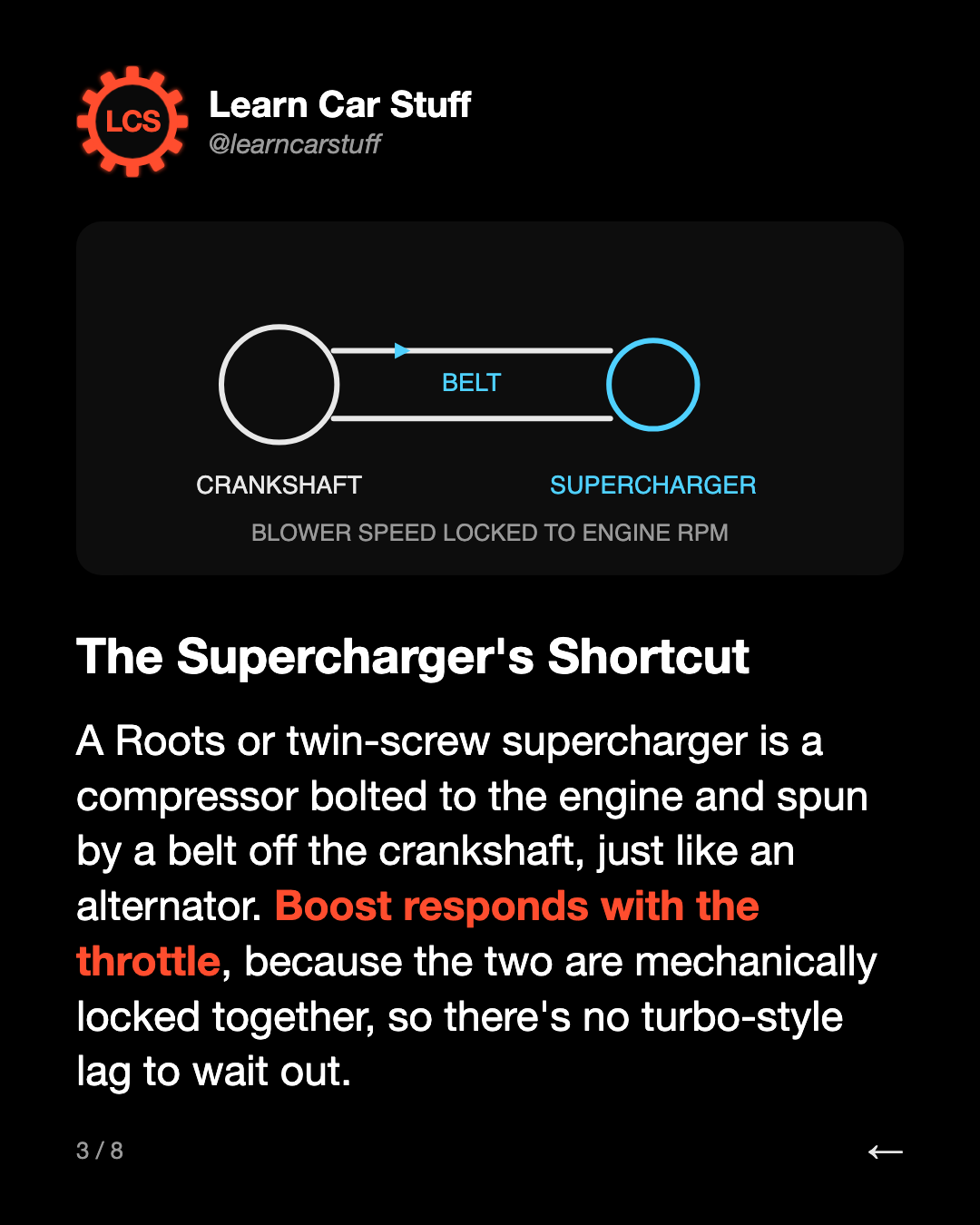
The Supercharger's Shortcut. A Roots or twin-screw supercharger is a compressor bolted to the engine and spun by a belt off the crankshaft, just like an alternator. Boost responds with the throttle, because the two are mechanically locked together, so there's no turbo-style lag to wait out.
The Supercharger's Shortcut

A Roots or twin-screw supercharger is a compressor bolted to the engine and spun by a belt off the crankshaft, just like an alternator. Boost responds with the throttle, because the two are mechanically locked together, so there's no turbo-style lag to wait out.

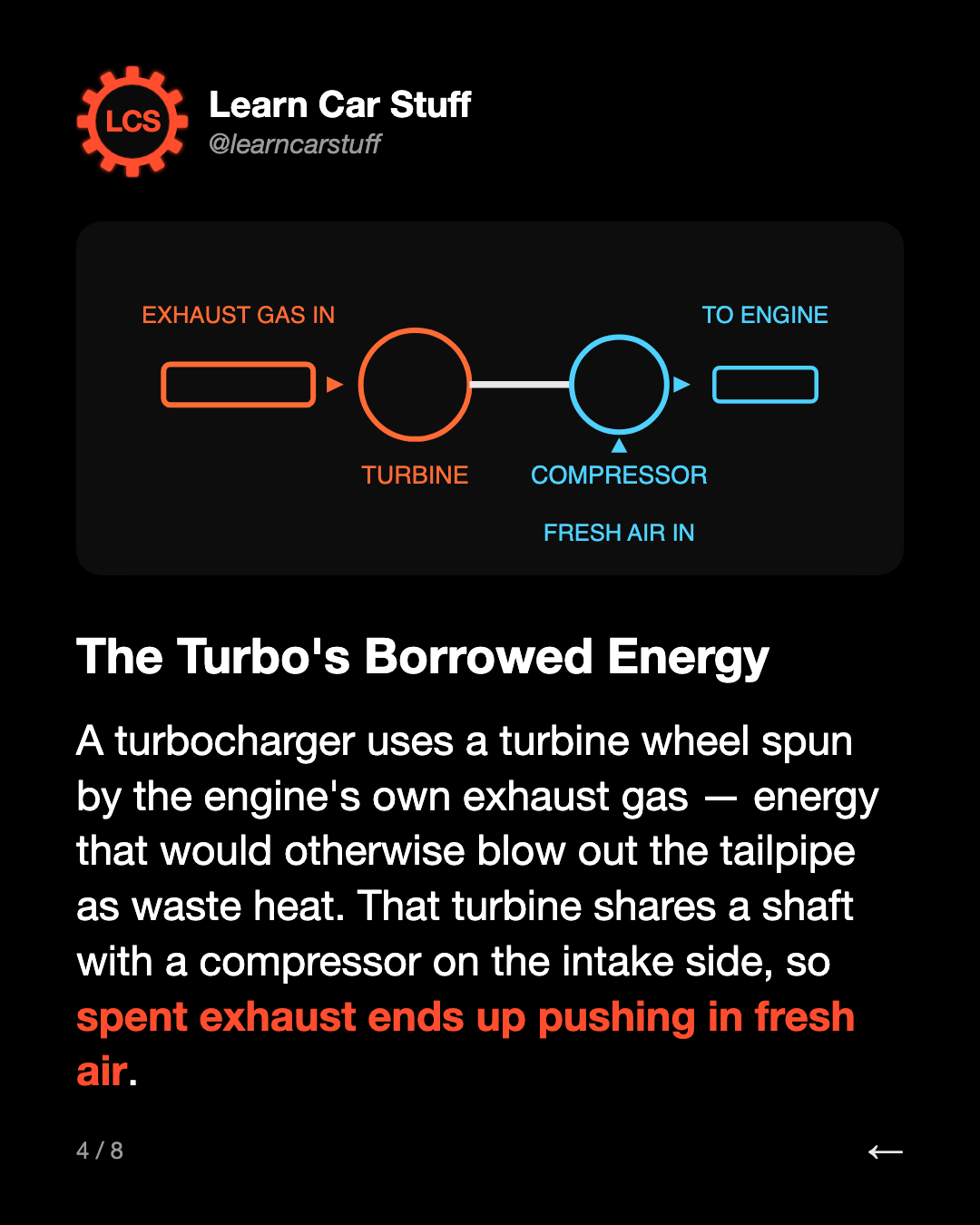
The Turbo's Borrowed Energy. A turbocharger uses a turbine wheel spun by the engine's own exhaust gas — energy that would otherwise blow out the tailpipe as waste heat. That turbine shares a shaft with a compressor on the intake side, so spent exhaust ends up pushing in fresh air.
The Turbo's Borrowed Energy

A turbocharger uses a turbine wheel spun by the engine's own exhaust gas — energy that would otherwise blow out the tailpipe as waste heat. That turbine shares a shaft with a compressor on the intake side, so spent exhaust ends up pushing in fresh air.

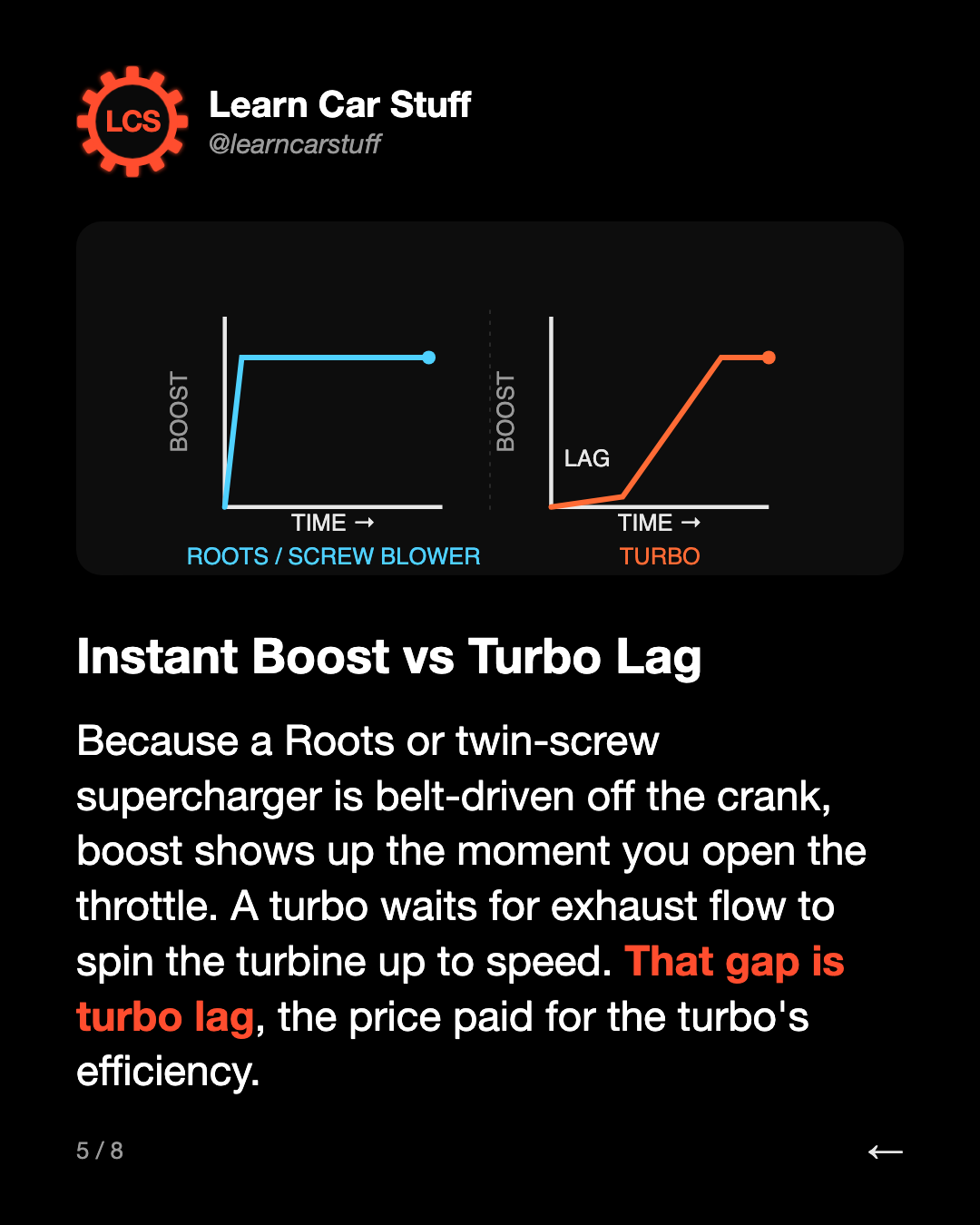
Instant Boost vs Turbo Lag. Because a Roots or twin-screw supercharger is belt-driven off the crank, boost shows up the moment you open the throttle. A turbo waits for exhaust flow to spin the turbine up to speed. That gap is turbo lag, the price paid for the turbo's efficiency.
Instant Boost vs Turbo Lag

Because a Roots or twin-screw supercharger is belt-driven off the crank, boost shows up the moment you open the throttle. A turbo waits for exhaust flow to spin the turbine up to speed. That gap is turbo lag, the price paid for the turbo's efficiency.

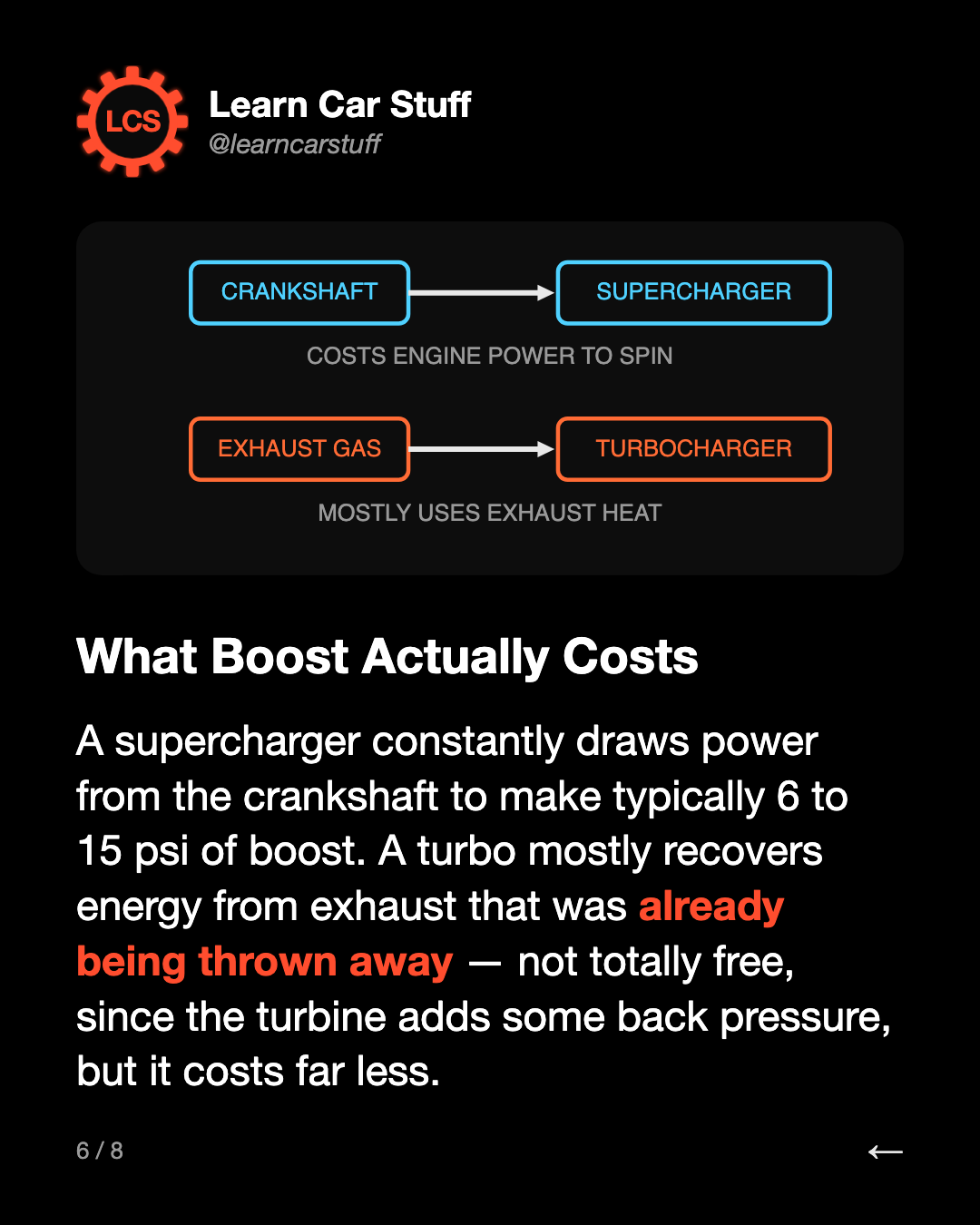
What Boost Actually Costs. A supercharger constantly draws power from the crankshaft to make typically 6 to 15 psi of boost. A turbo mostly recovers energy from exhaust that was already being thrown away — not totally free, since the turbine adds some back pressure, but it costs far less.
What Boost Actually Costs

A supercharger constantly draws power from the crankshaft to make typically 6 to 15 psi of boost. A turbo mostly recovers energy from exhaust that was already being thrown away — not totally free, since the turbine adds some back pressure, but it costs far less.

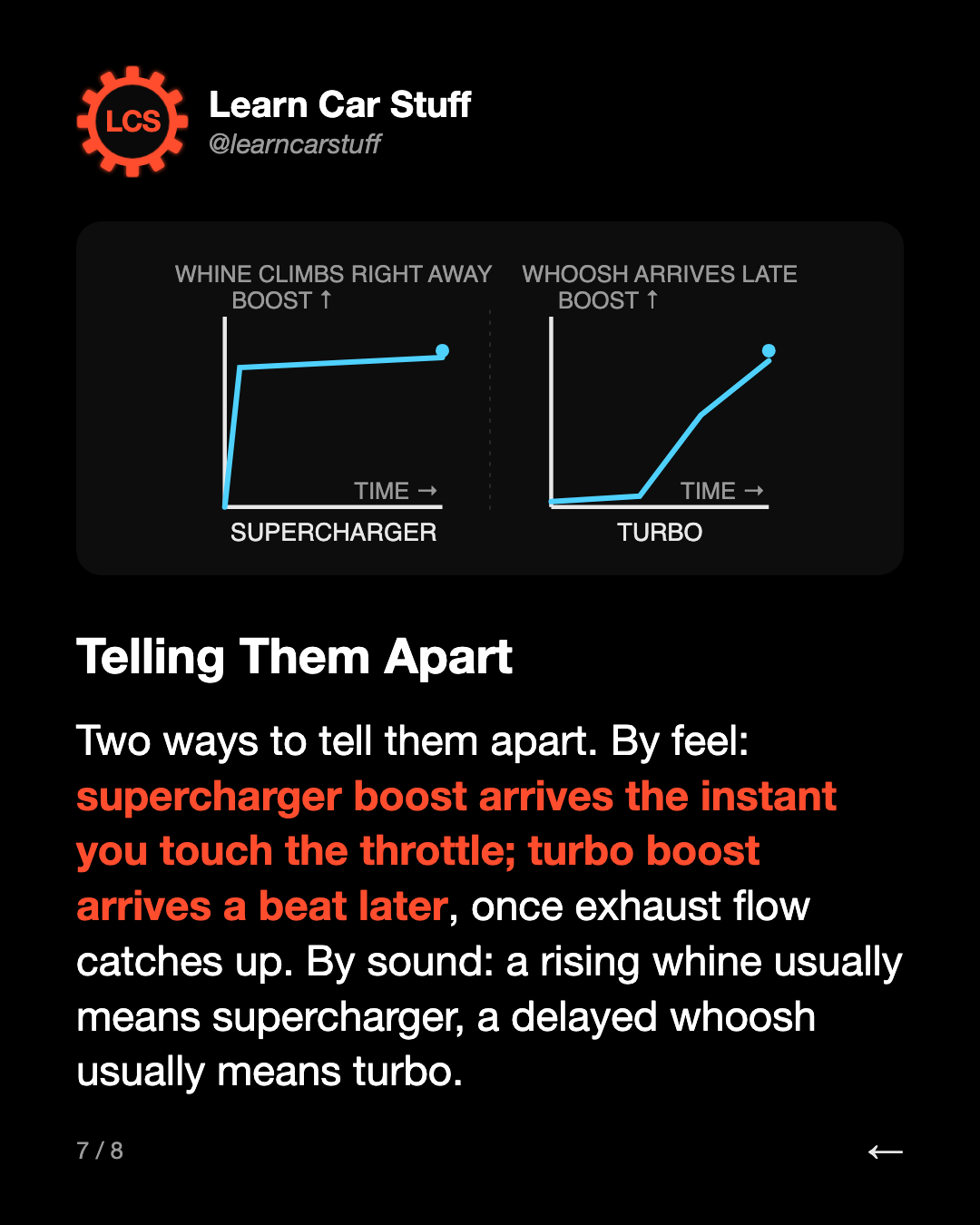
Telling Them Apart. Two ways to tell them apart. By feel: supercharger boost arrives the instant you touch the throttle; turbo boost arrives a beat later, once exhaust flow catches up. By sound: a rising whine usually means supercharger, a delayed whoosh usually means turbo.
Telling Them Apart

Two ways to tell them apart. By feel: supercharger boost arrives the instant you touch the throttle; turbo boost arrives a beat later, once exhaust flow catches up. By sound: a rising whine usually means supercharger, a delayed whoosh usually means turbo.
Follow @learncarstuffSave this post on Instagram

More posts