
Learn Car Stuff
← All posts

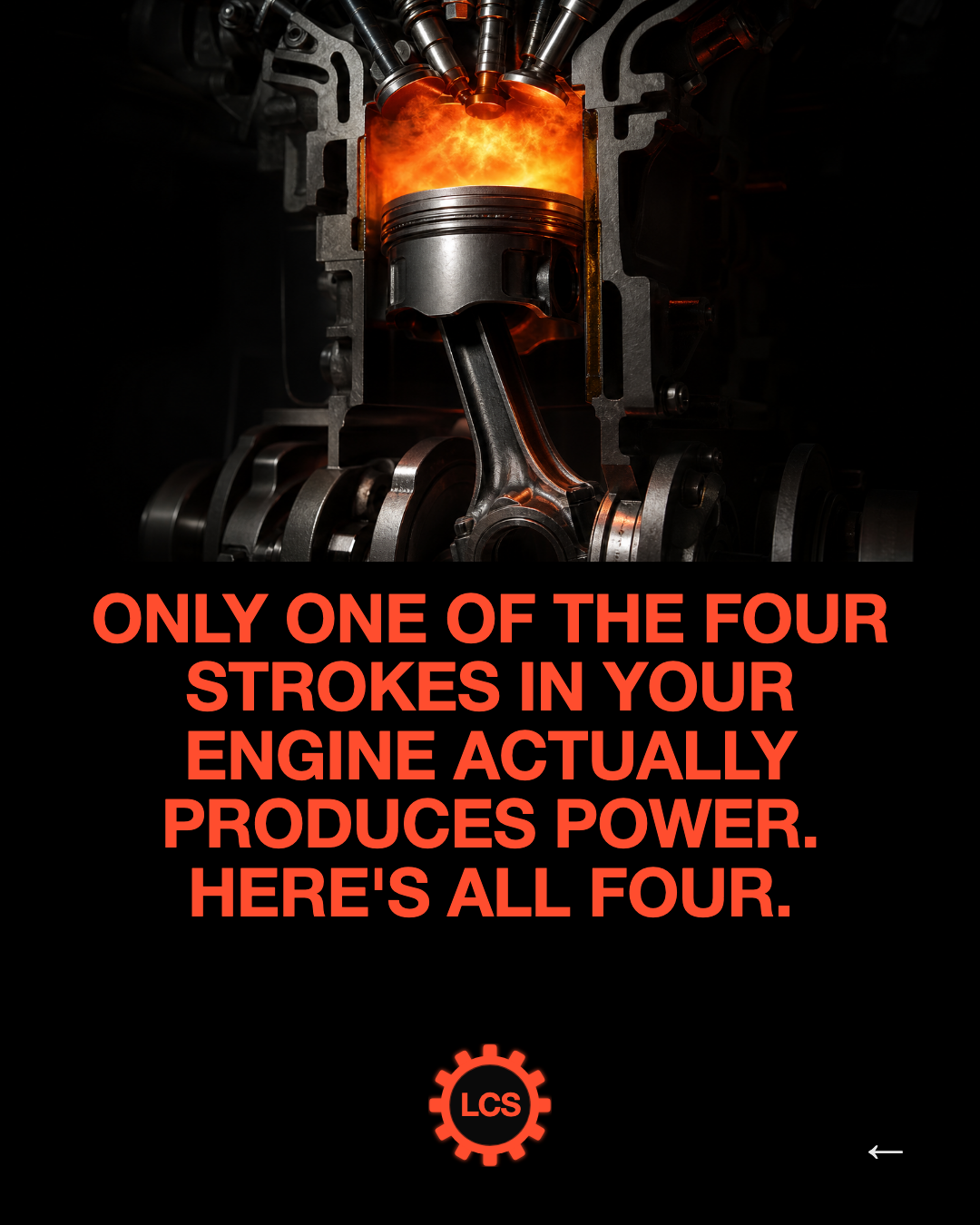
Only one of the four strokes in your engine actually produces power. Here's all four.
· View on Instagram · View on Facebook

Only one of the four strokes in your engine actually produces power. Here's all four.
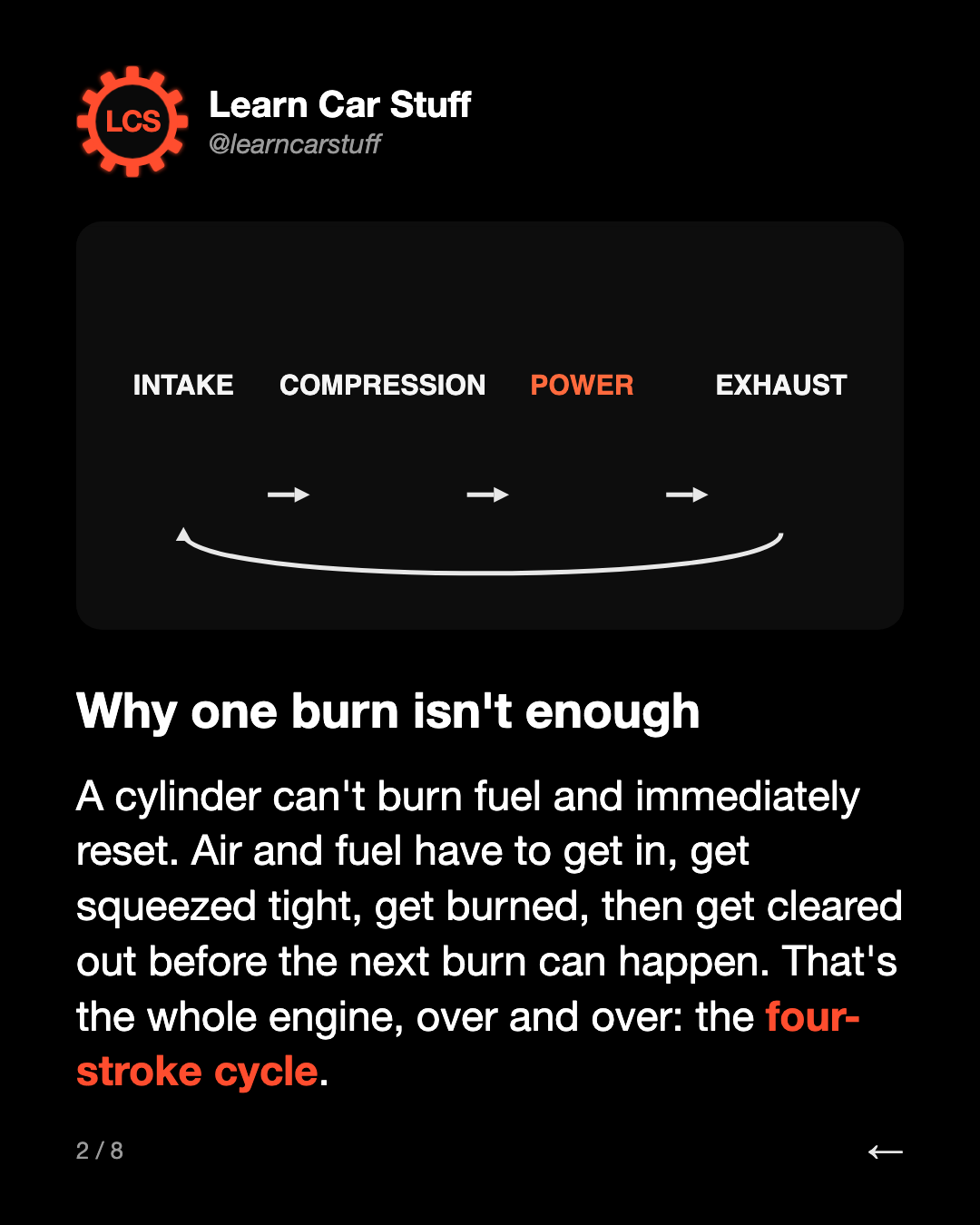
Why one burn isn't enough. A cylinder can't burn fuel and immediately reset. Air and fuel have to get in, get squeezed tight, get burned, then get cleared out before the next burn can happen. That's the whole engine, over and over: the four-stroke cycle.
Why one burn isn't enough

A cylinder can't burn fuel and immediately reset. Air and fuel have to get in, get squeezed tight, get burned, then get cleared out before the next burn can happen. That's the whole engine, over and over: the four-stroke cycle.

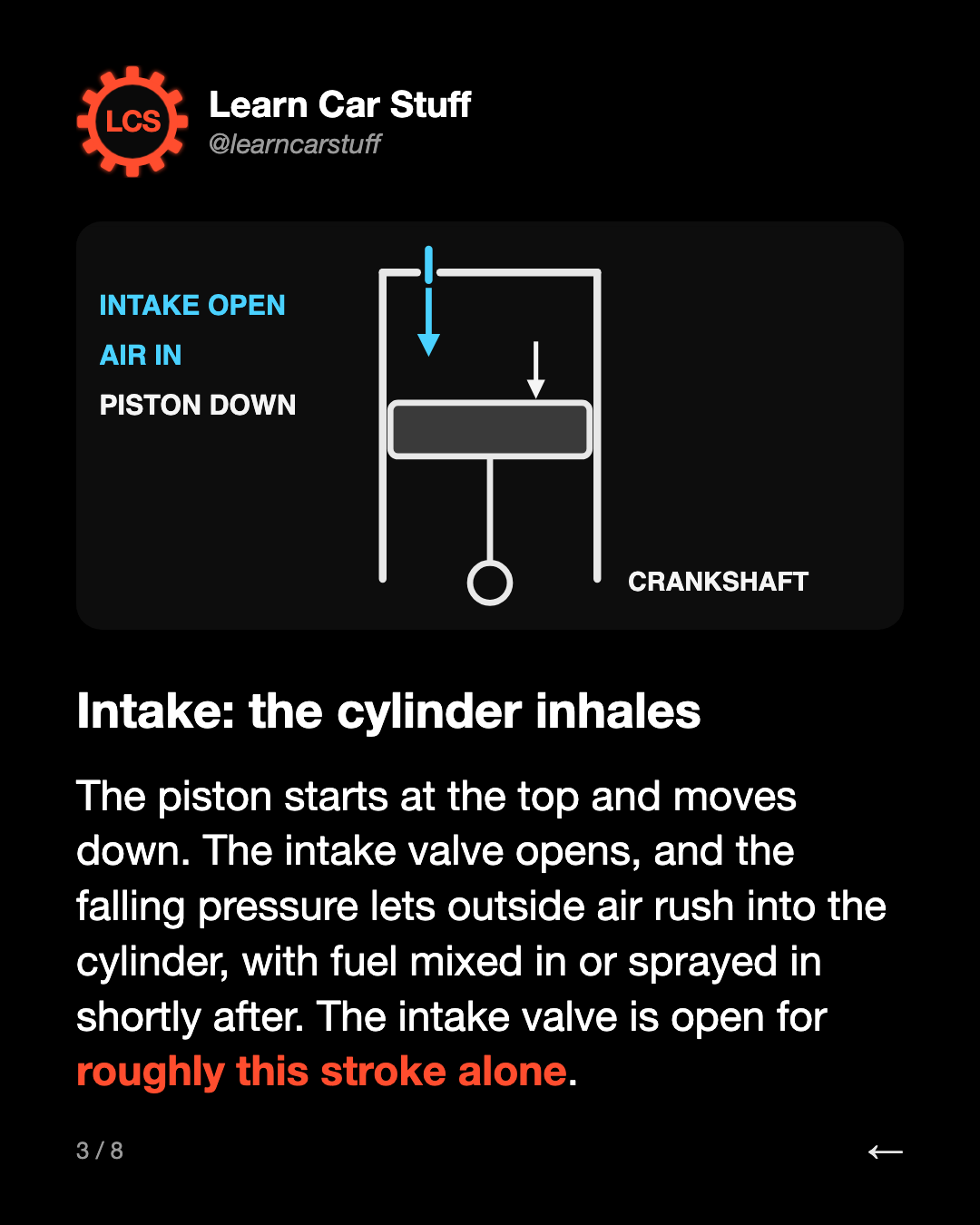
Intake: the cylinder inhales. The piston starts at the top and moves down. The intake valve opens, and the falling pressure lets outside air rush into the cylinder, with fuel mixed in or sprayed in shortly after. The intake valve is open for roughly this stroke alone.
Intake: the cylinder inhales

The piston starts at the top and moves down. The intake valve opens, and the falling pressure lets outside air rush into the cylinder, with fuel mixed in or sprayed in shortly after. The intake valve is open for roughly this stroke alone.

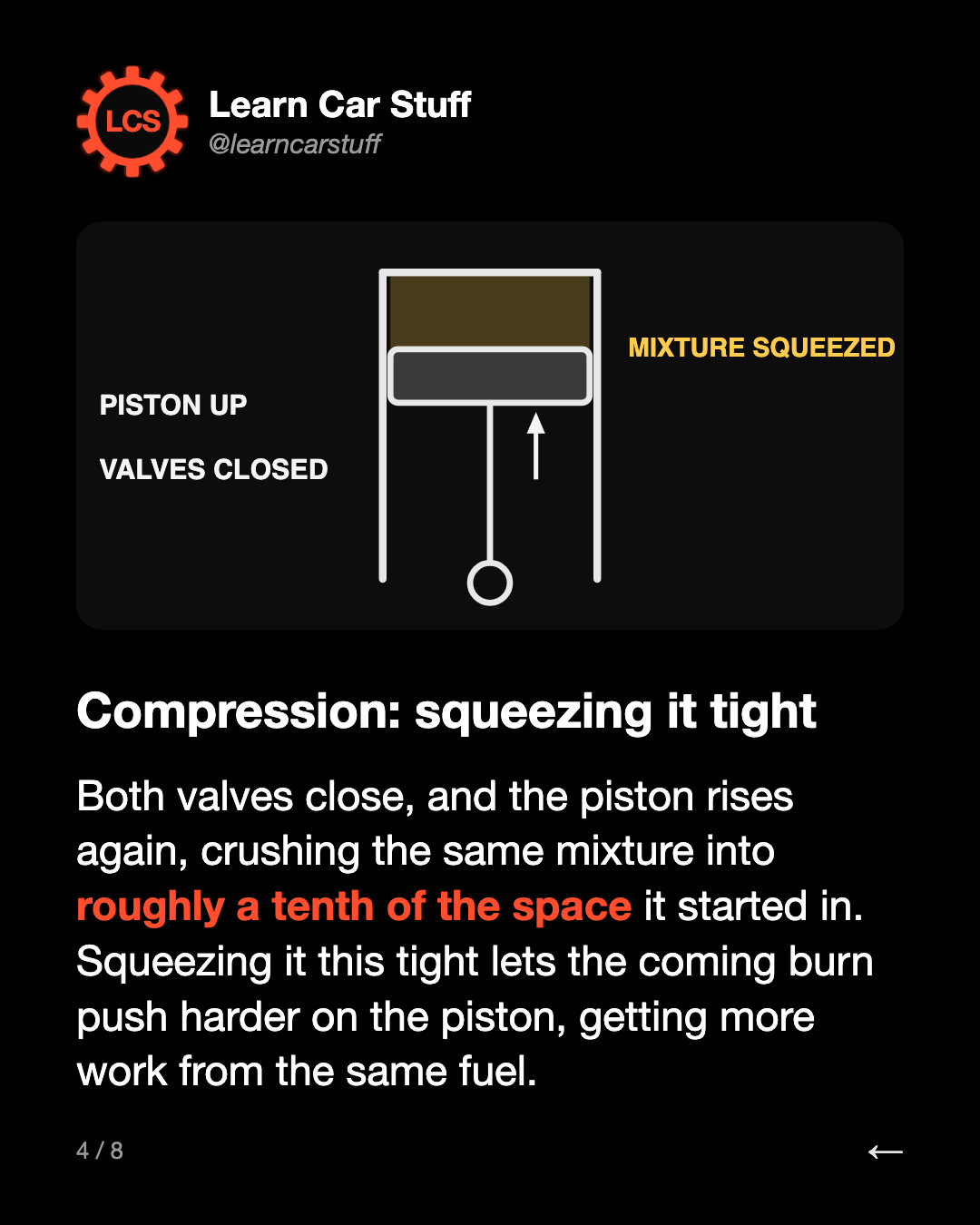
Compression: squeezing it tight. Both valves close, and the piston rises again, crushing the same mixture into roughly a tenth of the space it started in. Squeezing it this tight lets the coming burn push harder on the piston, getting more work from the same fuel.
Compression: squeezing it tight

Both valves close, and the piston rises again, crushing the same mixture into roughly a tenth of the space it started in. Squeezing it this tight lets the coming burn push harder on the piston, getting more work from the same fuel.

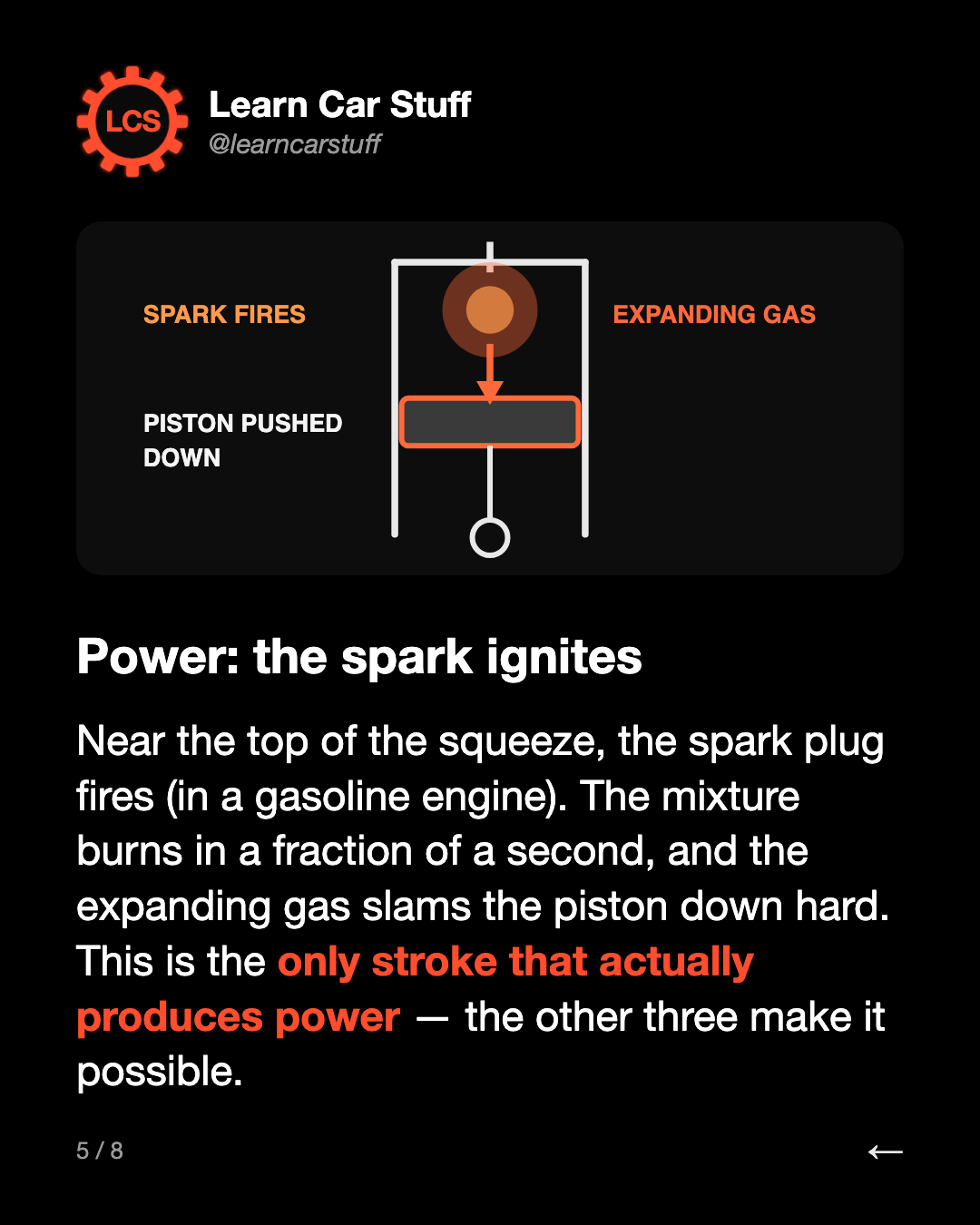
Power: the spark ignites. Near the top of the squeeze, the spark plug fires (in a gasoline engine). The mixture burns in a fraction of a second, and the expanding gas slams the piston down hard. This is the only stroke that actually produces power — the other three make it possible.
Power: the spark ignites

Near the top of the squeeze, the spark plug fires (in a gasoline engine). The mixture burns in a fraction of a second, and the expanding gas slams the piston down hard. This is the only stroke that actually produces power — the other three make it possible.

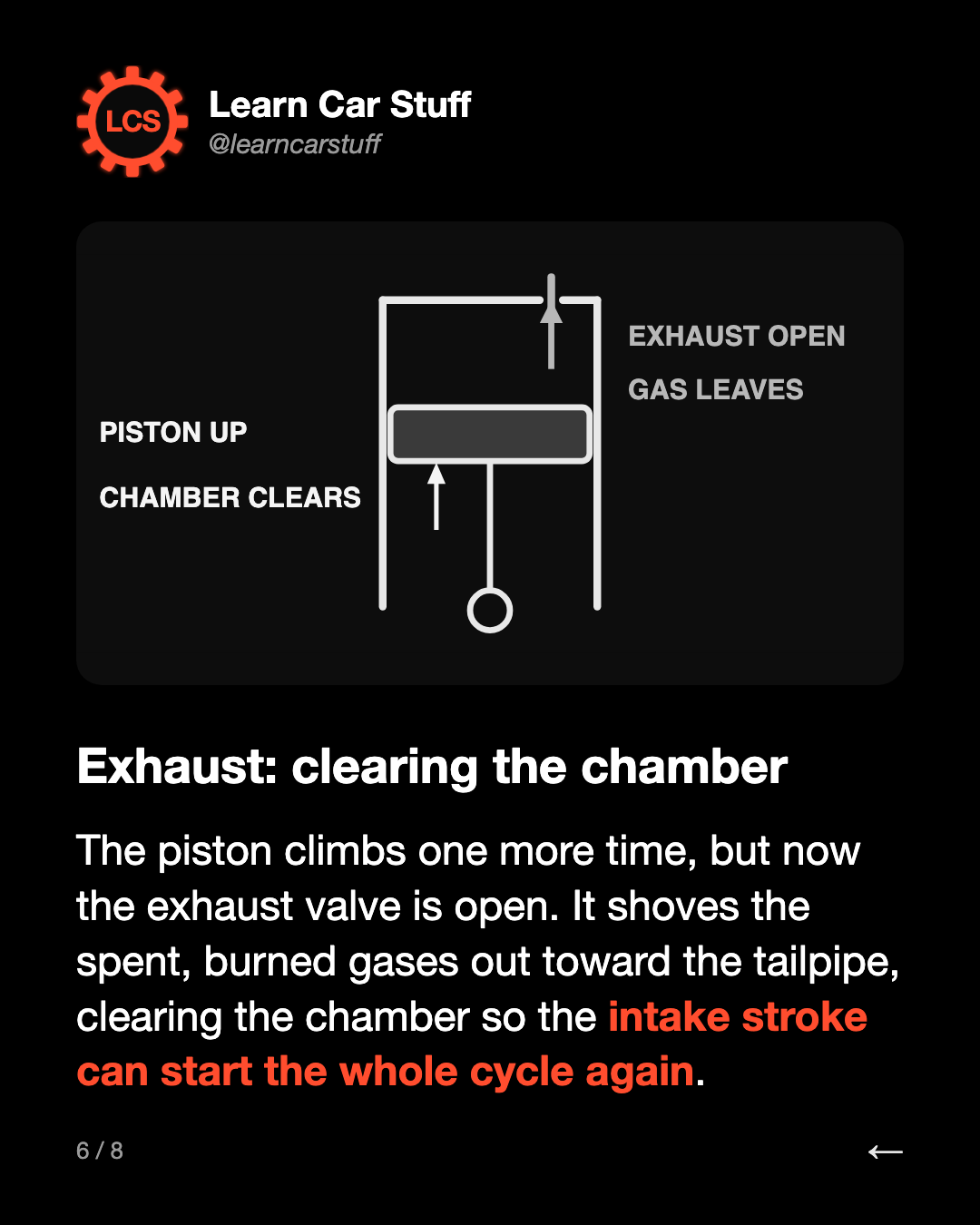
Exhaust: clearing the chamber. The piston climbs one more time, but now the exhaust valve is open. It shoves the spent, burned gases out toward the tailpipe, clearing the chamber so the intake stroke can start the whole cycle again.
Exhaust: clearing the chamber

The piston climbs one more time, but now the exhaust valve is open. It shoves the spent, burned gases out toward the tailpipe, clearing the chamber so the intake stroke can start the whole cycle again.

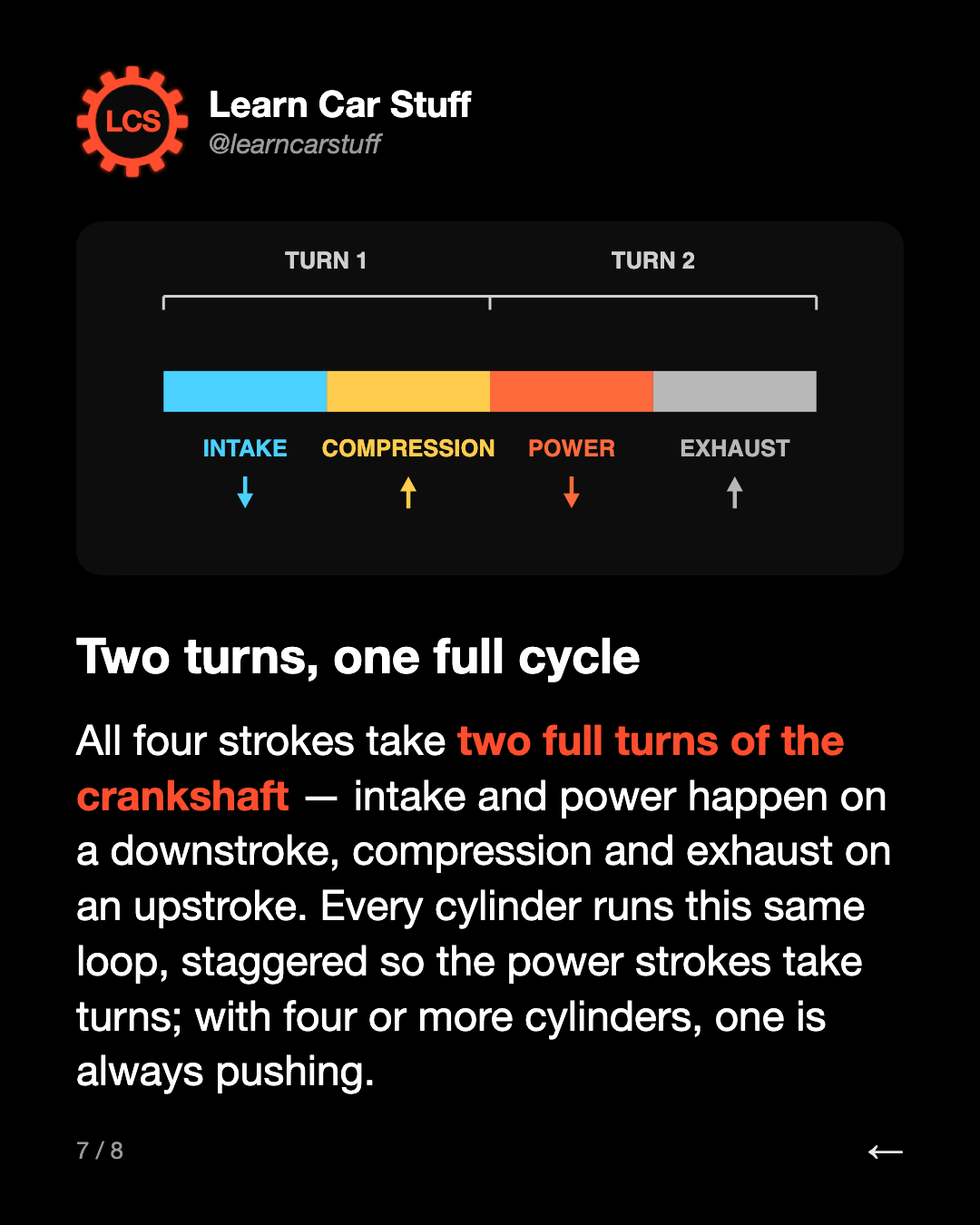
Two turns, one full cycle. All four strokes take two full turns of the crankshaft — intake and power happen on a downstroke, compression and exhaust on an upstroke. Every cylinder runs this same loop, staggered so the power strokes take turns; with four or more cylinders, one is always pushing.
Two turns, one full cycle

All four strokes take two full turns of the crankshaft — intake and power happen on a downstroke, compression and exhaust on an upstroke. Every cylinder runs this same loop, staggered so the power strokes take turns; with four or more cylinders, one is always pushing.
Follow @learncarstuffSave this post on Instagram

More posts