
Learn Car Stuff
← All posts

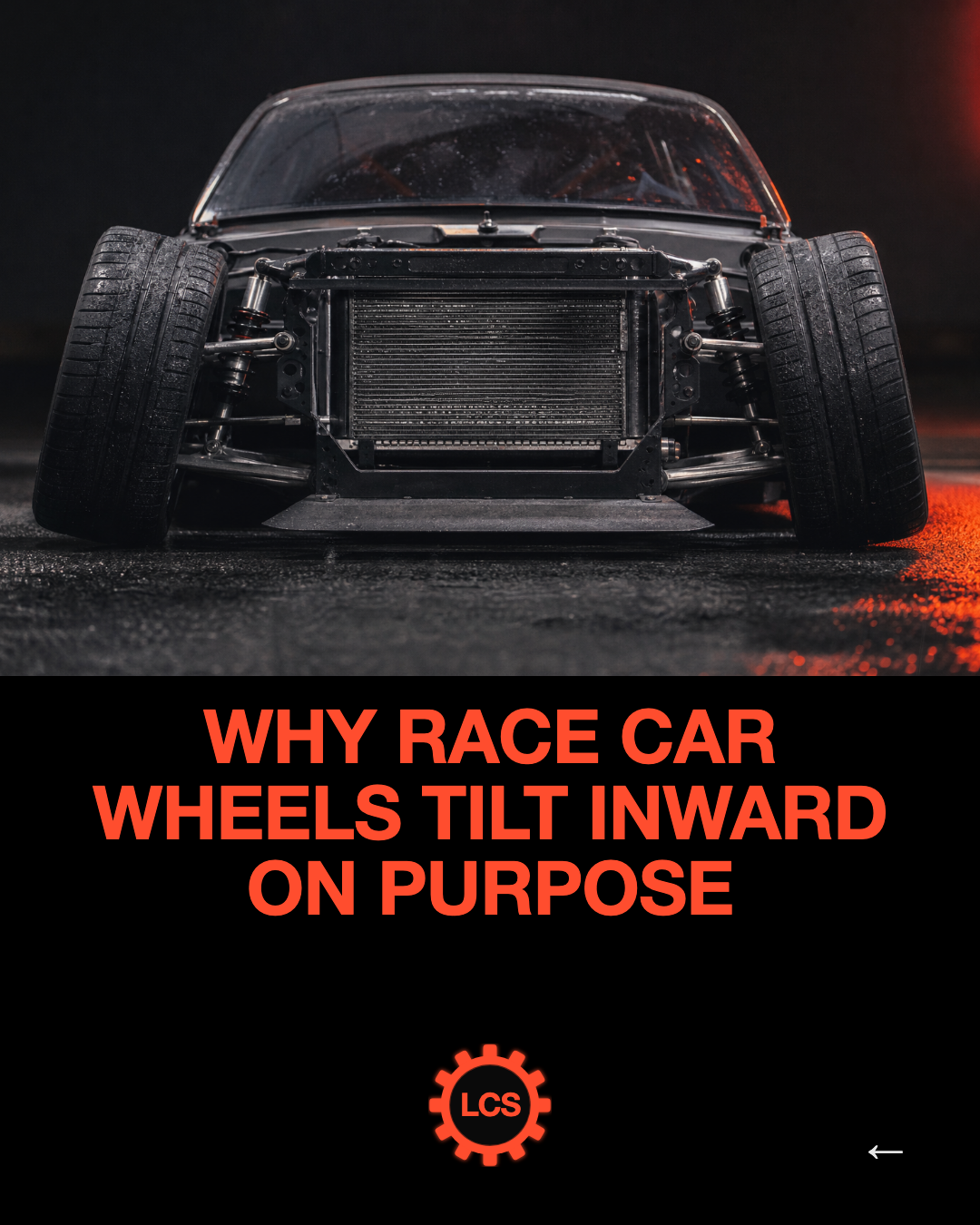
Why race car wheels tilt inward on purpose
· View on Instagram · View on Facebook

Why race car wheels tilt inward on purpose
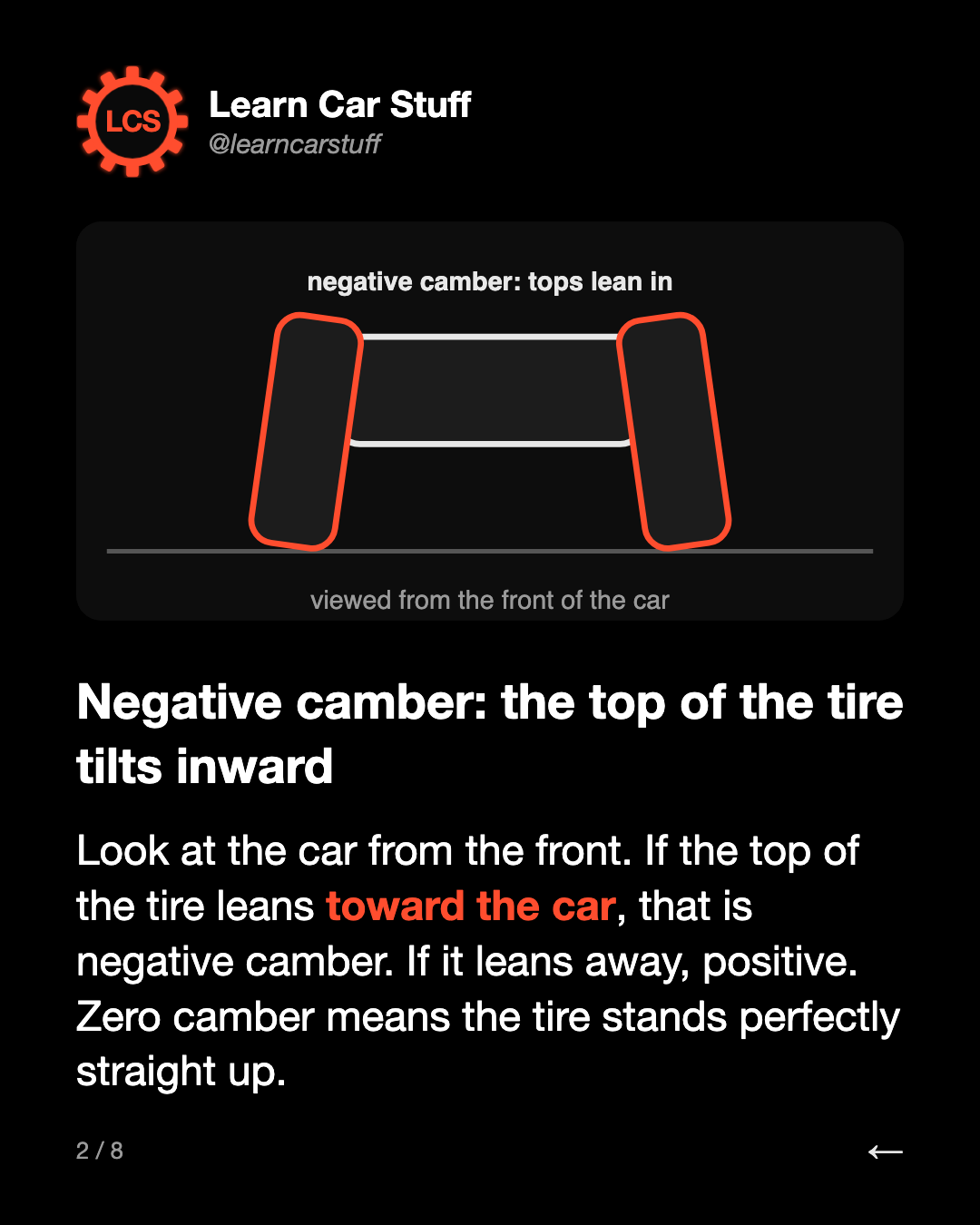
Negative camber: the top of the tire tilts inward. Look at the car from the front. If the top of the tire leans toward the car, that is negative camber. If it leans away, positive. Zero camber means the tire stands perfectly straight up.
Negative camber: the top of the tire tilts inward

Look at the car from the front. If the top of the tire leans toward the car, that is negative camber. If it leans away, positive. Zero camber means the tire stands perfectly straight up.

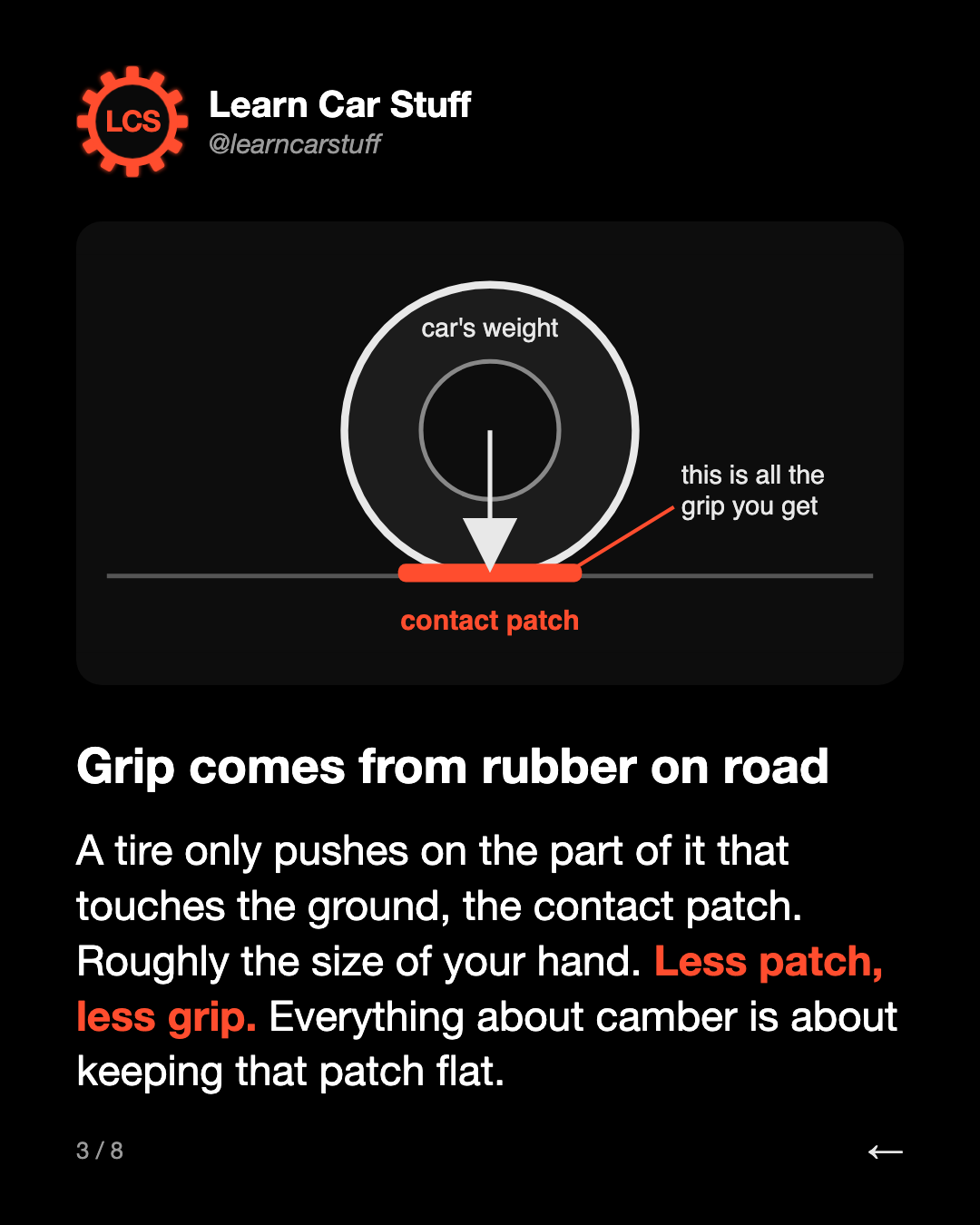
Grip comes from rubber on road. A tire only pushes on the part of it that touches the ground, the contact patch. Roughly the size of your hand. Less patch, less grip. Everything about camber is about keeping that patch flat.
Grip comes from rubber on road

A tire only pushes on the part of it that touches the ground, the contact patch. Roughly the size of your hand. Less patch, less grip. Everything about camber is about keeping that patch flat.

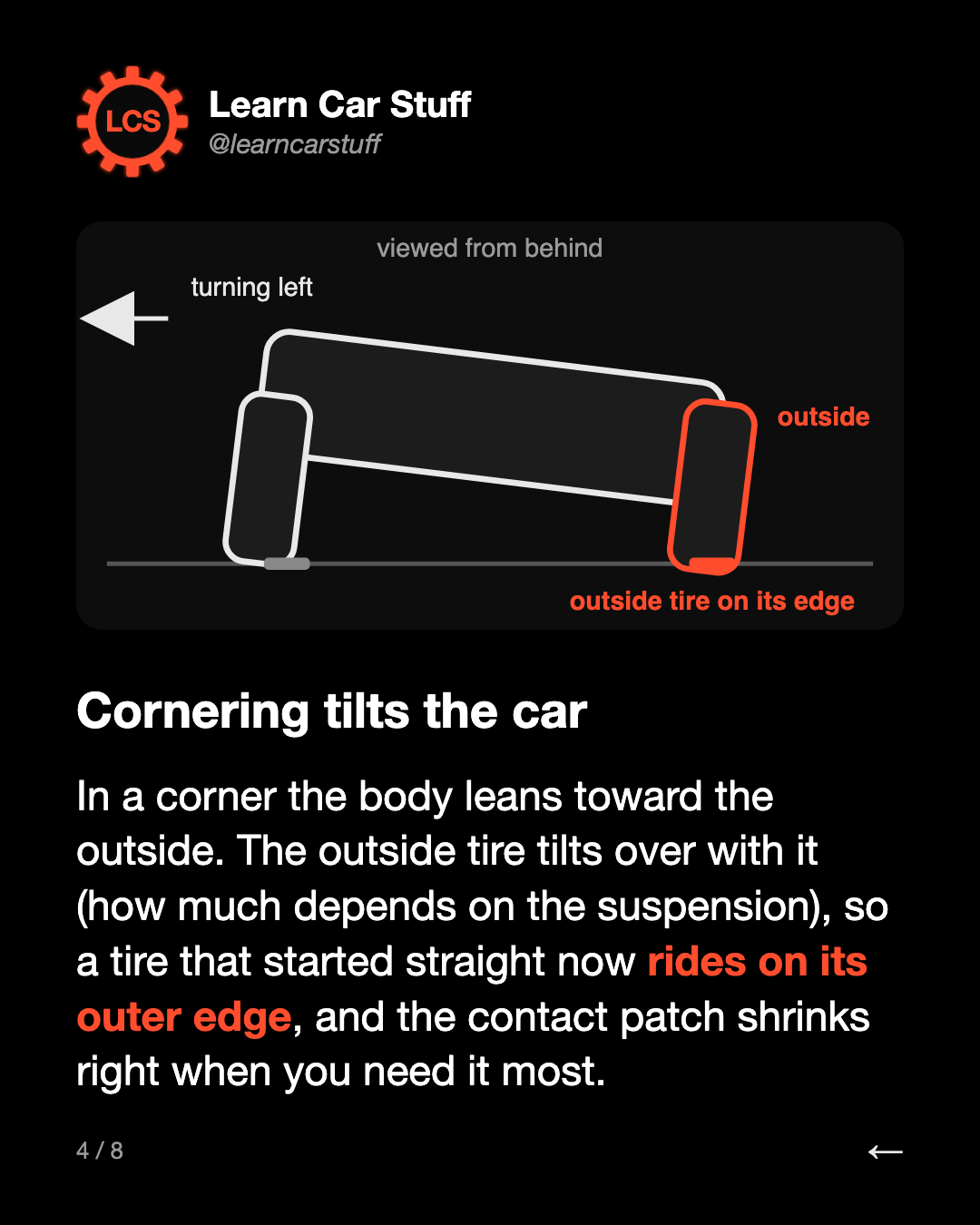
Cornering tilts the car. In a corner the body leans toward the outside. The outside tire tilts over with it (how much depends on the suspension), so a tire that started straight now rides on its outer edge, and the contact patch shrinks right when you need it most.
Cornering tilts the car

In a corner the body leans toward the outside. The outside tire tilts over with it (how much depends on the suspension), so a tire that started straight now rides on its outer edge, and the contact patch shrinks right when you need it most.

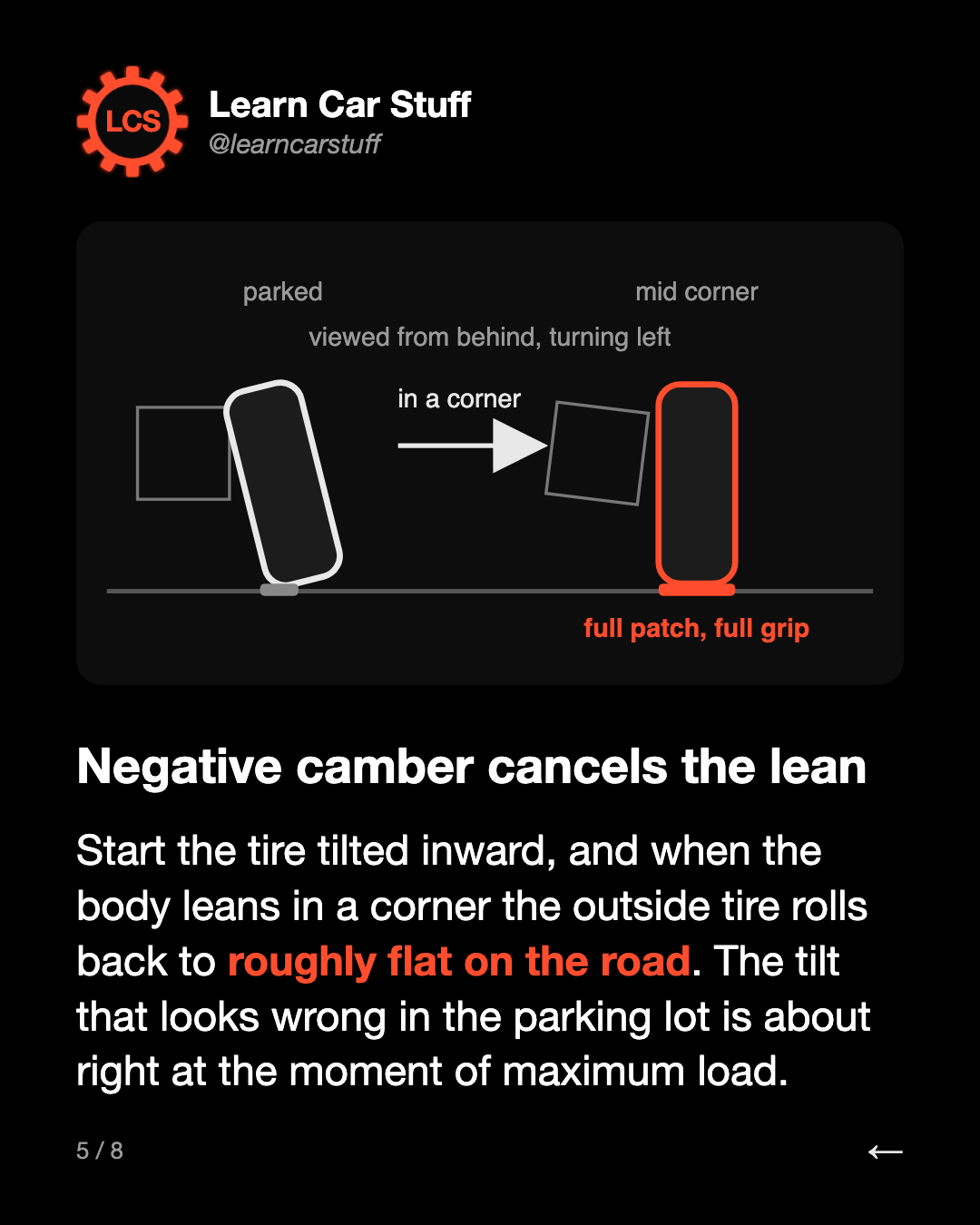
Negative camber cancels the lean. Start the tire tilted inward, and when the body leans in a corner the outside tire rolls back to roughly flat on the road. The tilt that looks wrong in the parking lot is about right at the moment of maximum load.
Negative camber cancels the lean

Start the tire tilted inward, and when the body leans in a corner the outside tire rolls back to roughly flat on the road. The tilt that looks wrong in the parking lot is about right at the moment of maximum load.

Why not crank it to the max. Too much tilt and the tire rides on its inner edge on straights: less braking grip, faster edge wear. Street cars run about 0.5 to 1.5 degrees negative. Track cars run more, harder cornering flexes the tire and suspension, tipping the outside tire toward its outer edge.
Why not crank it to the max

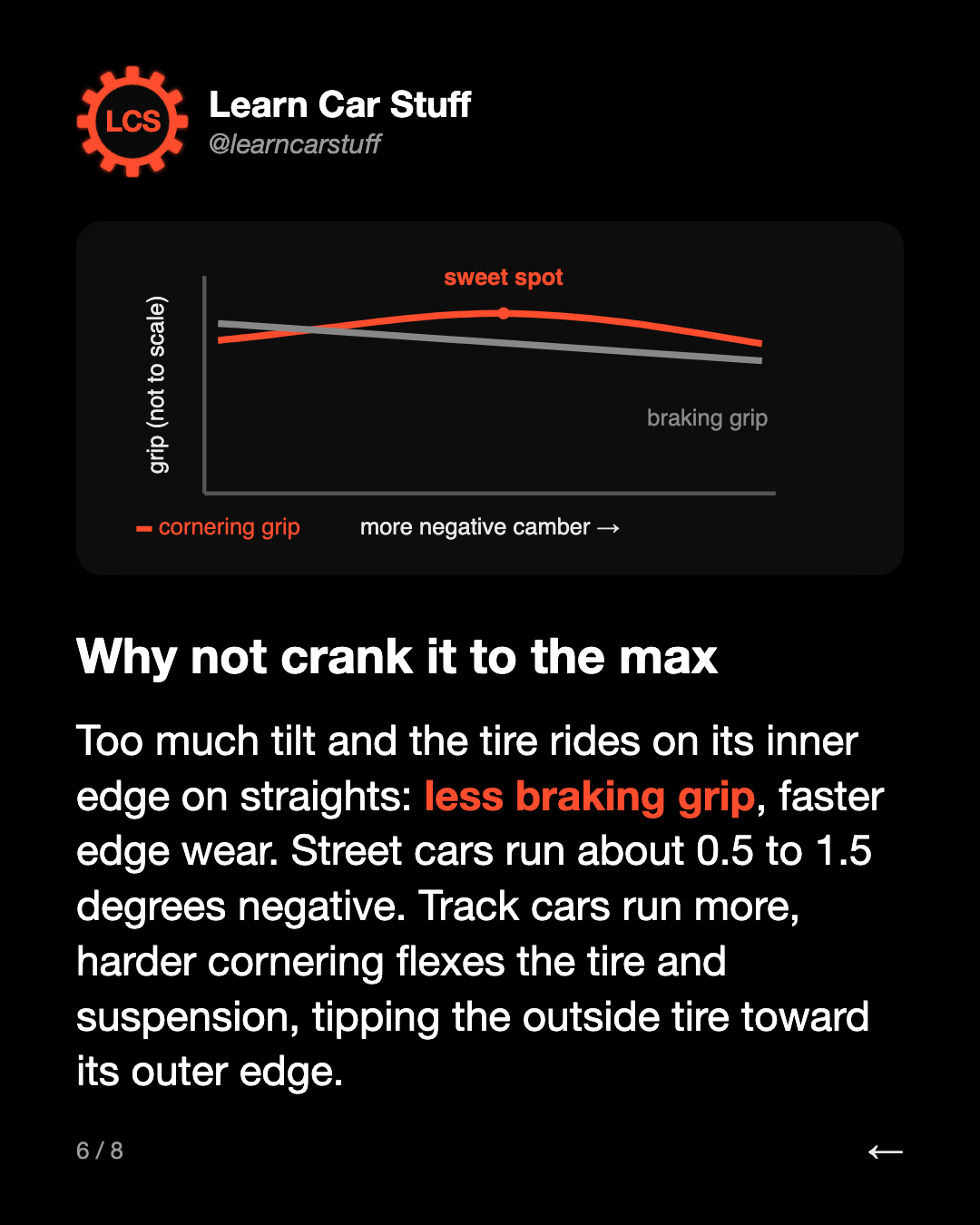
Too much tilt and the tire rides on its inner edge on straights: less braking grip, faster edge wear. Street cars run about 0.5 to 1.5 degrees negative. Track cars run more, harder cornering flexes the tire and suspension, tipping the outside tire toward its outer edge.

What to remember. On a track car, camber is a bet on how hard the car will corner. A few degrees of tilt on a race car reads as "this car expects hard corners." If the inside edge is worn, camber may be set too aggressive; a shop can check.
What to remember

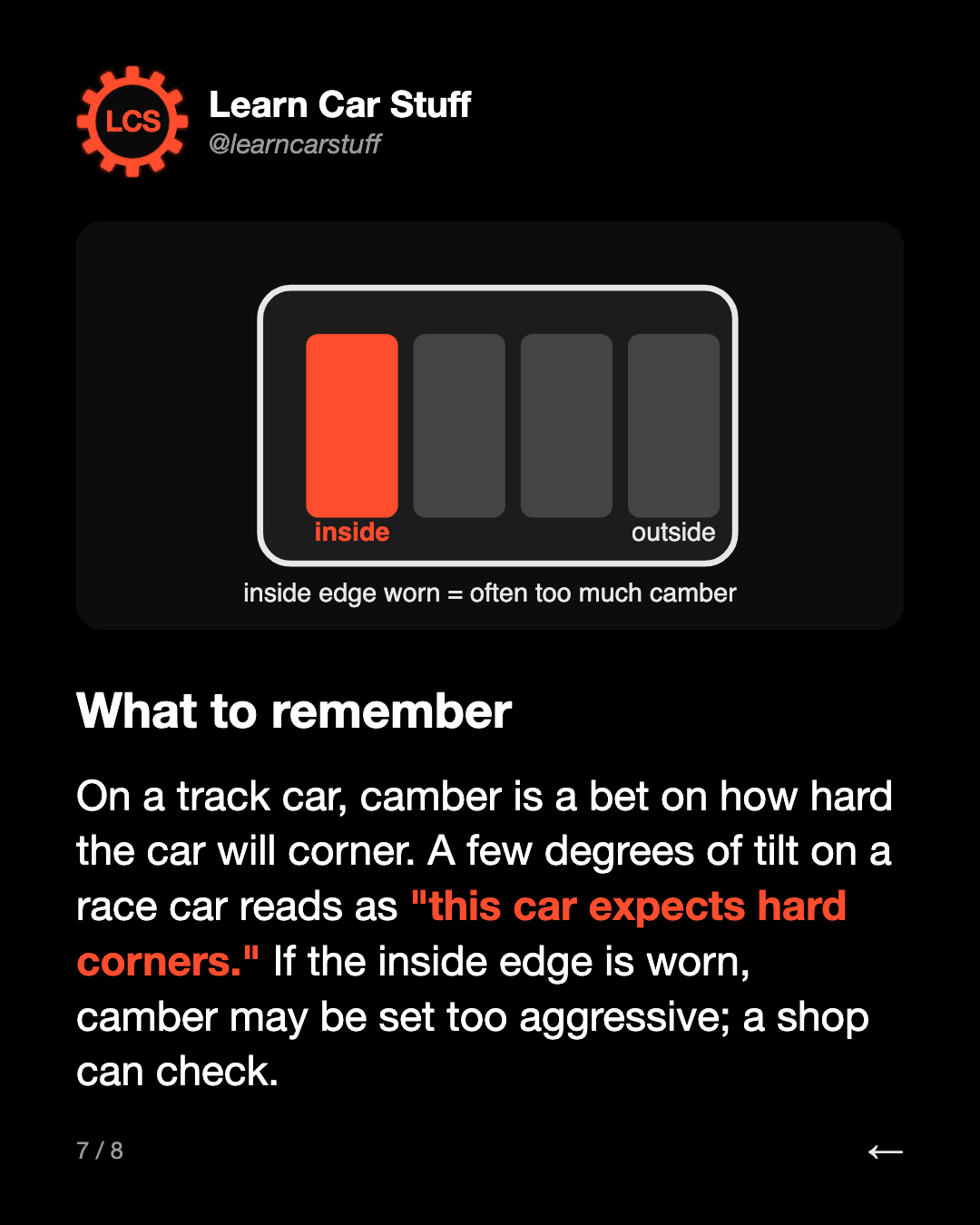
On a track car, camber is a bet on how hard the car will corner. A few degrees of tilt on a race car reads as "this car expects hard corners." If the inside edge is worn, camber may be set too aggressive; a shop can check.
Follow @learncarstuffSave this post on Instagram

More posts